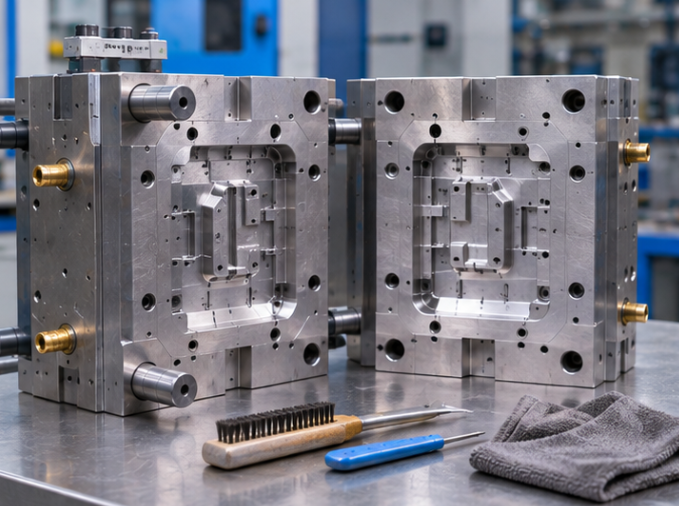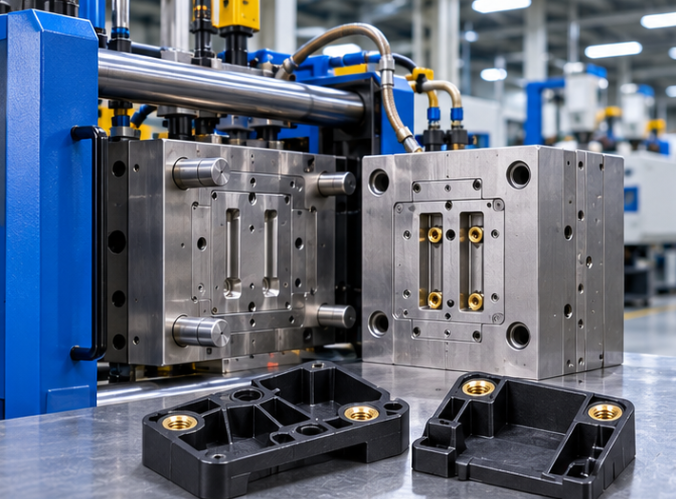

How much does an injection mold cost? For B2B buyers, the answer depends on more than the size of the plastic part. Mold complexity, steel selection, cavity count, production volume, dimensional requirements, and validation work can all change the final tooling price.
As a broad planning reference, a simple prototype or low-volume mold might require a budget of a few thousand US dollars, while a production mold with complex mechanisms, multiple cavities, or demanding precision requirements can cost tens of thousands of dollars or more. These are illustrative budgeting ranges, not fixed market prices or a quotation from PALUM.
The more useful question is not simply, “What is the cheapest mold?” It is, “What tooling investment makes sense for the part, production volume, quality requirements, and expected service life?”
This guide explains the main factors behind injection mold cost, what buyers should look for in a quotation, and how to control tooling expenses without creating problems during production.
How Much Does an Injection Mold Typically Cost?
Injection mold prices vary widely because molds are engineered for specific parts and production requirements. Two plastic components of similar size can require very different tooling budgets if one has a straightforward shape and the other needs side actions, tight tolerances, or multiple molding stages.
The following ranges are illustrative estimates for early budgeting only. Actual quotations depend on part drawings, tooling specifications, manufacturing location, validation scope, and commercial terms.
| Tooling Category | Illustrative Budget (USD) | Typical Characteristics |
|---|---|---|
| Simple prototype or low-volume mold | $1,000–$5,000 | Simple geometry, limited cavities, modest production requirements |
| Standard production mold | $5,000–$25,000 | Production-grade tooling, conventional mechanisms, defined quality requirements |
| Complex or multi-cavity production mold | $25,000–$80,000+ | Multiple cavities, precision features, complex actions, advanced runner systems, or demanding validation |
Important: These figures are illustrative planning estimates, not PALUM price commitments or verified industry averages. Some projects will fall outside these ranges. A project-specific quotation is necessary before setting a purchasing budget.
For example, a relatively simple enclosure may need a conventional two-plate mold. A similar-sized enclosure with side openings, internal threads, high-gloss surfaces, and strict assembly tolerances may require a substantially more complicated tool.
Production volume matters as well. A mold intended for a short pilot run may not need the same steel, wear resistance, cooling performance, or maintenance provisions as a tool expected to produce hundreds of thousands of parts.
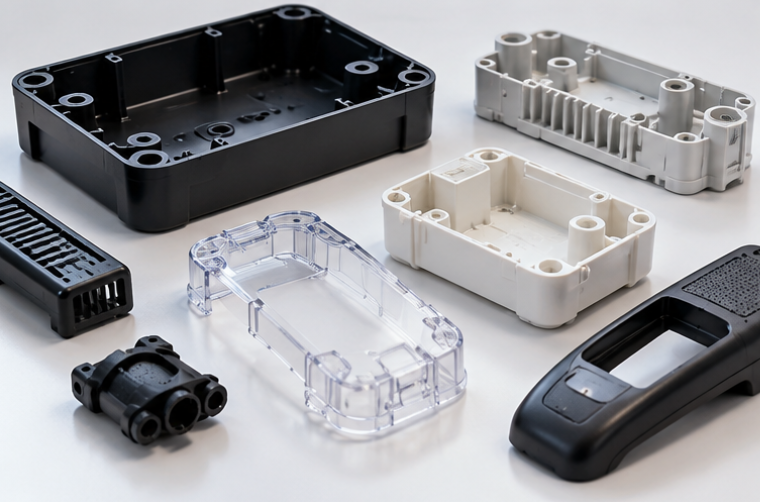
What Factors Affect Injection Mold Cost?
Most injection mold cost differences can be traced to the engineering and manufacturing work required to produce consistent, acceptable parts.
1. Part Size and Geometry
Larger parts generally require larger mold bases, more material, greater machining capacity, and potentially larger injection molding machines. However, size alone does not determine price.
A small connector housing with delicate ribs and tight dimensional requirements may be more difficult to tool than a larger, relatively simple plastic cover.
Features that can increase mold complexity include:
- Deep ribs and narrow slots
- Undercuts that prevent straight ejection
- Internal or external threads
- Complex sealing surfaces
- Thin walls with difficult filling behavior
- Multiple cosmetic surfaces requiring careful gate and parting-line placement
Each feature should be reviewed for its effect on mold construction, machining access, ejection, and long-term maintenance.
2. Mold Steel and Expected Tool Life
Tool steel selection affects material cost, machining difficulty, wear resistance, corrosion resistance, polishing performance, and mold service life.
Common mold steels include P20-type materials, 718H, S136, NAK80, and H13-type grades. Their suitability depends on the resin, part finish, production conditions, and expected tool life.
For example, abrasive glass-filled resins may create greater wear on mold surfaces than some unfilled materials. Corrosive materials or demanding optical finishes may also require specific steel properties or surface treatments.
Choosing the most expensive steel is not automatically the best decision. The goal is to select a material appropriate for the production program.
PALUM’s mold manufacturing capabilities include in-house machining, mold assembly, trial validation, and multiple cavity and core steel options.
3. Number of Cavities and Production Volume
A single-cavity mold produces one part per molding cycle. A multi-cavity mold produces multiple parts in the same cycle.
Increasing cavity count usually raises the initial tooling investment because the mold requires additional cavity and core machining, runner balancing, cooling, ejection, and validation.
However, a properly engineered multi-cavity mold may reduce manufacturing cost per part when demand is sufficiently high.
Consider two options for the same component:
- Single-cavity tooling: Lower initial mold investment, potentially suitable for smaller orders or early-stage production.
- Multi-cavity tooling: Higher initial investment, but potentially greater output per cycle and better economics for sustained production.
The correct choice depends on annual volume, order frequency, cycle time, machine capacity, part quality, and expected program duration.
Buyers should request a cavity-count recommendation based on their forecast rather than assuming that the highest possible cavity count is always preferable.
4. Slides, Lifters, and Other Mold Mechanisms
When a plastic part contains features that cannot be released through a simple opening movement, the mold may require slides, lifters, collapsible cores, or unscrewing mechanisms.
These systems add components, machining operations, fitting work, and maintenance requirements.
Sometimes a small design adjustment can eliminate an unnecessary side action. In other cases, the feature is essential to product function and the additional mechanism is justified.
This is why an early design for manufacturability review can have a meaningful effect on tooling cost.
5. Surface Finish and Dimensional Tolerances
Not every plastic part requires a mirror-polished surface or exceptionally tight tolerances.
High-gloss finishes, optical surfaces, precise mating features, and demanding cosmetic requirements can increase machining, polishing, inspection, and mold adjustment work.
Critical dimensions should be controlled according to functional requirements. Noncritical dimensions may allow more practical manufacturing tolerances.
For example, a sealing interface may require careful dimensional control, while a hidden cosmetic feature may not need the same precision.
Clearly separating critical and noncritical requirements helps prevent unnecessary tooling expense without compromising part performance.
6. Runner Systems and Specialized Molding Processes
Cold-runner and hot-runner systems have different cost structures.
A cold-runner system may involve a lower initial tooling investment, although runner material, recycling requirements, and handling can affect operating costs.
A hot-runner system generally adds components and controls to the mold, but may reduce runner waste and support efficient production in suitable applications.
Specialized processes such as two-shot (2K) molding, overmolding, insert molding, and gas-assisted or water-assisted molding can introduce additional tooling requirements.
These processes should be selected because they solve a product or manufacturing problem, not simply because they are more advanced.
Injection Mold Cost Breakdown: What Is Included in a Quotation?
A mold quotation should describe more than one total price. Buyers need to understand which engineering, manufacturing, testing, and delivery activities are included.
| Cost Component | What Buyers Should Check |
|---|---|
| DFM and mold design | Design review, mold layout, engineering revisions, and approval drawings |
| Steel and standard components | Steel grades, mold base, guides, ejectors, and other specified components |
| Machining and finishing | CNC, EDM, wire cutting, grinding, polishing, and fitting |
| Special mechanisms | Slides, lifters, unscrewing systems, hot runners, and associated controls |
| Assembly and mold trials | Assembly, trial runs, sample quantities, and trial reporting |
| Inspection and validation | Dimensional reports, sample approval, and project-specific quality documentation |
| Delivery and support | Packaging, freight terms, spare parts, maintenance, and warranty conditions |
Not every supplier includes these items in the same way. For instance, one quotation may include an agreed number of mold trials and sample sets, while another may charge separately for additional trials, design changes, or measurement reports.
Buyers should also clarify whether the quoted price includes applicable taxes, shipping, import charges, and any customer-specified components.
Comparing the total scope of supply is more useful than comparing headline tooling prices alone.
Tooling Cost vs. Injection Molding Cost Per Part
One of the most common budgeting mistakes is treating mold cost and plastic part manufacturing cost as the same expense.
Tooling cost is the investment required to design and manufacture the mold. Molding cost per part includes the recurring expenses associated with producing acceptable components.
For planning purposes, tooling cost can be allocated across the expected production quantity:
Tooling cost per part = Total tooling investment ÷ Expected production quantity
Consider this simplified example:
| Planning Item | Illustrative Value |
|---|---|
| Tooling investment | $12,000 |
| Expected production quantity | 20,000 parts |
| Allocated tooling cost per part | $0.60 |
In this example, $12,000 divided by 20,000 parts equals $0.60 in allocated tooling cost per part.
This does not mean the finished part costs $0.60. Resin, machine time, labor, scrap, inspection, secondary operations, packaging, and logistics must still be considered.
The calculation also assumes the full planned quantity is produced and that the tooling investment is allocated entirely to those units.
If the actual production quantity is lower than forecast, the allocated tooling cost per part increases. If production continues beyond the original forecast without major additional tooling expense, the allocation decreases.
This is why a higher initial mold investment can sometimes produce a better total project cost, particularly when it supports shorter cycles, stable quality, and longer production life.
For a more complete understanding of the manufacturing stage after tooling, see PALUM’s plastic injection molding services.
Why Do Injection Mold Quotes Vary Between Manufacturers?
Two suppliers can review the same drawing and return different prices without necessarily quoting the same technical solution.
Differences may come from:
- Different mold steel or component specifications
- Different expected tool life and maintenance assumptions
- Single-cavity versus multi-cavity proposals
- Different cooling, gating, and ejection designs
- Different machining and inspection requirements
- Different trial, sample, and validation allowances
- Different warranty, spare-part, and after-sales provisions
- Different shipping terms and delivery responsibilities
For example, one supplier might quote a basic mold intended for a limited production program. Another might propose a more durable tool designed for repeated high-volume runs.
The lower initial quote may be entirely appropriate for a short project. It may be less attractive if the buyer expects years of continuous production.
Before selecting a supplier, ask whether the quotations use the same part revision, cavity count, material requirements, mold life target, and acceptance criteria.
A price comparison becomes meaningful only after the technical scope is aligned.
How to Reduce Injection Mold Cost Without Sacrificing Quality
Cost reduction should begin with engineering decisions, not with indiscriminate cuts to tooling quality.
Simplify Features That Add Little Functional Value
Review whether difficult undercuts, unnecessarily deep ribs, complex internal features, or cosmetic details can be simplified.
Removing one avoidable slide mechanism may reduce mold complexity and make future maintenance easier.
Match the Mold Specification to the Production Plan
A short pilot run and a long-term high-volume program do not necessarily need the same tooling strategy.
Share realistic annual demand, expected product life, and possible volume increases so the mold can be specified appropriately.
Use Practical Tolerances and Surface Requirements
Reserve demanding tolerances and finishes for features that actually require them.
Engineering drawings should clearly identify critical dimensions, functional surfaces, and inspection requirements.
Resolve Design Questions Before Steel Cutting
Changes made during the digital design stage are often easier to manage than changes made after mold components have been machined.
Early review of draft angles, wall thickness, parting lines, gate locations, cooling, and ejection can reduce the risk of expensive rework.
PALUM provides DFM and engineering support to review these manufacturing considerations before tooling begins.
Evaluate Total Cost, Not Just the Initial Mold Price
A mold that costs less initially may still lead to higher total expenditure if it requires frequent repairs, produces excessive scrap, or cannot meet production demand.
Consider tooling investment together with expected output, part quality, maintenance, and production efficiency.
What Information Is Needed for an Accurate Injection Mold Quote?
The quality of a quotation depends on the quality of the project information supplied.
To receive a useful injection mold cost estimate, prepare the following details where available:
- 3D CAD model: STEP, IGES, Parasolid, or another usable engineering format.
- 2D drawing: Critical dimensions, tolerances, notes, and inspection requirements.
- Plastic material: Preferred resin grade or functional material requirements.
- Production volume: Initial order quantity, annual forecast, and expected program life.
- Appearance requirements: Surface texture, color, cosmetic areas, and finish standards.
- Assembly requirements: Mating parts, inserts, sealing features, and functional interfaces.
- Quality requirements: Inspection reports, sample approval, traceability, or industry-specific documentation.
- Project schedule: Required sample date, production launch target, and delivery location.
If the design is still under development, identify which specifications are confirmed and which remain open. A manufacturer can then distinguish firm requirements from assumptions used for preliminary pricing.
At PALUM, mold design, precision machining, assembly, and mold trials are supported in-house. Buyers can review the company’s custom mold manufacturing capabilities before submitting a project.
Frequently Asked Questions About Injection Mold Cost
How much does a simple plastic injection mold cost?
A simple injection mold may require a budget of a few thousand US dollars, but there is no universal starting price. Part geometry, mold material, production quantity, machining requirements, and validation scope all affect the quotation. A preliminary estimate should be based on at least a part drawing and expected production volume.
Why is injection mold tooling expensive?
An injection mold is a precision manufacturing tool, not just a shaped block of metal. Its cost reflects engineering design, tool steel, CNC and EDM machining, precision fitting, cooling and ejection systems, mold trials, and inspection. Complex molds may also require specialized mechanisms and extensive validation.
Is a multi-cavity injection mold more expensive?
Usually, a multi-cavity mold has a higher initial tooling cost than a comparable single-cavity mold because it requires additional precision features and balanced production systems. However, it may lower manufacturing cost per part at higher volumes. The best option depends on the production forecast and part requirements.
Can injection mold cost be reduced after the design is complete?
Sometimes. A DFM review may identify opportunities to simplify geometry, adjust noncritical tolerances, or change the tooling approach. However, major design changes after steel cutting can introduce additional machining and delay costs. Cost optimization is generally more effective before mold manufacturing begins.
How can I get an accurate injection mold quotation?
Provide a 3D model, dimensioned drawing, material requirements, expected production quantity, critical tolerances, surface-finish specifications, and project schedule. Also clarify the required mold life, sample approval process, and delivery terms. These details help suppliers prepare comparable quotations with fewer assumptions.
Final Thoughts: Choose the Right Tooling Investment
Injection mold cost is influenced by part geometry, tool steel, cavity count, production requirements, mold mechanisms, surface finish, and validation scope. A meaningful quotation should explain what the buyer is receiving, not simply present a total price.
For B2B sourcing teams, the best tooling decision balances initial investment with production efficiency, part quality, maintenance, and expected program life. Comparing suppliers against the same technical requirements is essential.
If you are budgeting for a new plastic component or reviewing an existing mold quotation, PALUM can assess your drawing, discuss tooling options, and help identify the specifications that matter most to your project. Share your available CAD files and production requirements through the PALUM project inquiry page to request a project-specific mold quotation.