Choosing the right steel affects the cost, durability, and performance of an injection mold. Two manufacturers may quote the same plastic part with different tool steels. Both recommendations can make sense, depending on the production requirements.
One supplier might recommend P20 for a general-purpose mold. Another may suggest H13 for demanding wear conditions or S136 for a polished cavity that needs corrosion protection. These choices can create a noticeable price difference. However, a higher steel price does not automatically mean better mold performance.
A practical injection mold steel selection process starts with the plastic resin, expected production volume, surface finish, mold structure, and operating conditions.
Quick Answer: P20 suits many conventional injection molds because it offers a practical balance of machinability, performance, and cost. H13 can handle demanding mechanical and thermal conditions with appropriate heat treatment. S136 offers corrosion resistance and excellent polishing potential. The right choice depends on the specific mold component, resin, production requirements, and material properties.
How to Choose Steel for an Injection Mold
Before comparing steel grades, define your production requirements and the conditions your mold will face.
A mold for an unfilled polypropylene housing may need different materials from a high-volume connector mold that processes glass-filled engineering plastic.
Start with Resin, Production Volume and Surface Requirements
Five questions can guide your initial selection:
- What plastic resin will you use? Identify the exact grade, including glass fiber, mineral fillers, or flame-retardant additives.
- How many parts will you produce? Consider your annual production forecast, target mold life, and cavity count.
- What surface finish do you need? A textured industrial enclosure has different requirements from a high-gloss transparent component.
- Which areas will experience wear? Gates, runners, shutoffs, sliding surfaces, and inserts may face concentrated friction.
- What operating conditions will the mold face? Cooling water, humidity, resin decomposition products, and storage conditions can increase corrosion risks.
Review these factors before selecting steel based on price or general material descriptions.
Evaluate Wear Resistance, Toughness and Corrosion Resistance
Hardness matters, but it does not determine overall mold performance.
Higher hardness can improve resistance to certain types of wear. However, the steel must also handle repeated mechanical loads without excessive cracking or chipping.
Corrosion resistance becomes important when moisture or aggressive processing conditions threaten cavity surfaces and cooling channels.
Machinability, heat-treatment stability, repairability, and polishability also influence the final result.
Engineers need to balance these properties according to each mold component’s function.
P20 vs H13 vs S136: Key Differences
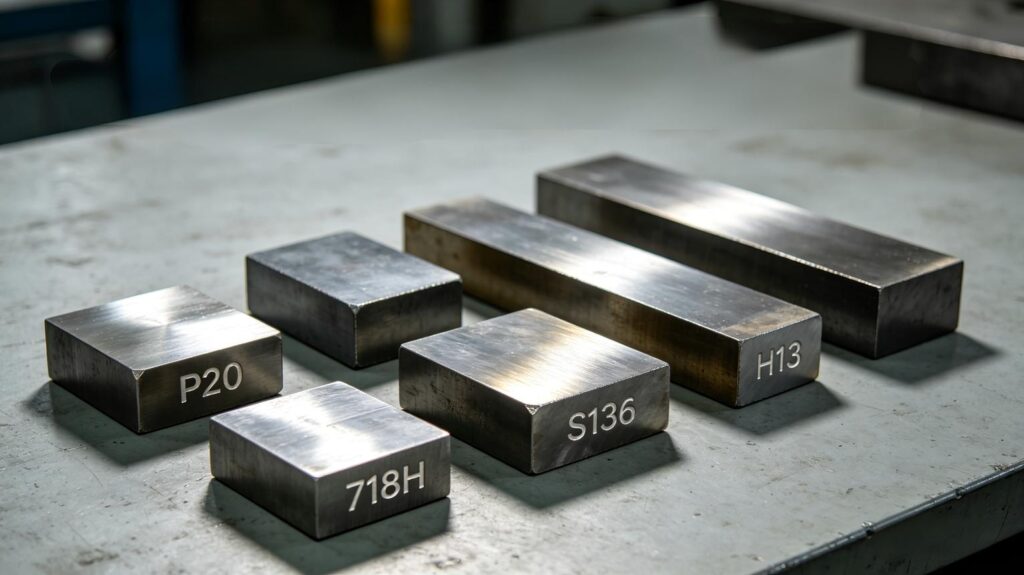
P20, H13, and S136 serve different purposes in injection mold manufacturing. They do not represent three interchangeable quality levels.
Each steel offers a different combination of performance characteristics.
| Comparison | P20 Mold Steel | H13 Mold Steel | S136 Mold Steel |
|---|---|---|---|
| Steel category | General-purpose mold steel, commonly available in a prehardened condition | Chromium-molybdenum hot-work tool steel | Corrosion-resistant stainless mold steel |
| Main advantage | Machinability and practical tooling cost | Mechanical and thermal performance after suitable heat treatment | Corrosion resistance and high polishability |
| Typical application | Conventional plastic mold cavities and cores | Demanding cores, inserts, and selected high-load components | High-finish cavities and corrosion-sensitive applications |
| Heat treatment | Commonly supplied prehardened | Often requires hardening and tempering | Depends on the exact grade and required working hardness |
| Wear considerations | Handles many standard applications | Offers advantages under suitable hardened conditions | Depends on hardness and operating conditions |
| Corrosion resistance | Limited compared with corrosion-resistant grades | Not its primary advantage | Key selection advantage |
| Surface finish | Supports many conventional finishes | Depends on grade and processing | Suits demanding polishing requirements |
| Relative cost | Often lower | May involve higher material and heat-treatment costs | Often higher material costs |
| Main purchasing check | Exact P20 variant and delivery hardness | Heat treatment, final hardness, and toughness | Exact S136 specification, cleanliness, and final hardness |
These comparisons describe typical material characteristics, not guaranteed performance rankings. Different manufacturers may offer modified grades with different properties.
P20 Mold Steel: Practical for General-Purpose Tooling
P20 mold steel provides a practical balance of strength, machinability, polishing performance, and cost for many conventional plastic injection molds.
Steel suppliers commonly offer P20-type grades in a prehardened condition. This allows manufacturers to machine many mold components without performing a separate full hardening cycle afterward.
P20 works well for various plastic housings, covers, and industrial components when the operating conditions match its capabilities.
However, highly abrasive fillers, aggressive corrosion conditions, or demanding surface requirements may justify another steel grade.
When reviewing a quotation, ask for the exact P20 specification, manufacturer, and delivery hardness. The name “P20” alone may not provide enough information for technical approval.
H13 Mold Steel: For Demanding Wear and Thermal Conditions
H13 is a chromium-molybdenum hot-work tool steel. It offers a useful combination of strength, toughness, and thermal performance under suitable heat-treatment conditions.
Engineers may select H13 for specific cores, inserts, or mold components that face demanding mechanical or thermal loads.
H13 usually needs carefully controlled hardening and tempering to achieve the intended working properties.
Poor heat-treatment control can affect dimensional stability, toughness, and component reliability.
However, H13 is not automatically the best choice for every glass-filled plastic. Some applications may benefit more from specialty mold steels, coatings, or replaceable wear-resistant inserts.
The best solution depends on the actual wear mechanism and mold design.
S136 Mold Steel: Corrosion Resistance and High Polishability
S136 is a corrosion-resistant stainless mold steel that manufacturers often use for demanding cavity surfaces and high-quality finishes.
Its characteristics can benefit transparent molded parts, polished cosmetic components, and applications where moisture or processing conditions create corrosion risks.
Suitable corrosion-resistant steel can also help reduce maintenance related to rust and surface deterioration.
However, high-quality polishing still requires good material cleanliness, precise machining, suitable heat treatment, and careful finishing.
Buyers should confirm the exact S136 product specification rather than assuming that all stainless mold steels offer the same performance.
How Resin Type Affects Mold Steel Selection
The plastic resin directly influences mold steel requirements.
Different materials create different levels of abrasion, corrosion, temperature exposure, and mechanical stress.
General-Purpose Resins: PP, PE and ABS
Unfilled polypropylene, polyethylene, and many conventional ABS grades often work well with general-purpose mold steels.
P20-type materials can provide a practical solution when production volume, surface finish, and operating conditions fall within their capabilities.
However, resin type alone cannot determine the best steel.
For example, a large multi-cavity mold with tight tolerances may need a different approach from a simple single-cavity mold that processes the same resin.
Engineers must assess the full production requirements before making a recommendation.
Glass-Filled and Abrasive Engineering Plastics
Glass fibers and mineral fillers can increase abrasive wear, especially around gates, runners, narrow flow passages, and heavily loaded surfaces.
When processing glass-filled PA, PBT, PPS, or other reinforced engineering plastics, engineers should evaluate filler type, concentration, and flow conditions.
Possible solutions include harder tool steels, wear-resistant inserts, surface treatments, coatings, or component design changes.
A replaceable insert may offer a more practical solution than upgrading an entire cavity block.
No single steel grade provides the best answer for every reinforced resin.
Corrosive Resins and Additives
Some plastic formulations release or produce substances that create corrosive processing conditions.
PVC, certain flame-retardant formulations, moisture, and aggressive additives deserve particular attention.
Corrosion-resistant mold steel may offer advantages when these conditions threaten cavity surfaces, cooling performance, or maintenance requirements.
Engineers should review the actual resin grade, processing guidance, and operating environment before recommending a steel.
| Resin or Operating Condition | Primary Concern | Steel Selection Consideration |
|---|---|---|
| Unfilled PP or PE | Production volume and general wear | General-purpose prehardened steel may work well |
| Standard ABS | Surface finish and dimensional consistency | Balance polishing requirements with expected mold life |
| Glass-filled PA or PBT | Abrasive wear | Evaluate hardened steels, inserts, and local wear protection |
| Reinforced engineering resins | Wear, temperature, and tool complexity | Review component-specific steel and heat treatment |
| Corrosion-sensitive processing | Chemical attack and maintenance | Consider suitable corrosion-resistant mold steel |
| High-gloss or transparent parts | Polishing quality and surface stability | Evaluate clean, high-polish mold steel grades |
Use this table as an initial guide. The final recommendation should reflect your project’s actual operating conditions.
Mold Steel Hardness, Heat Treatment and Surface Finish
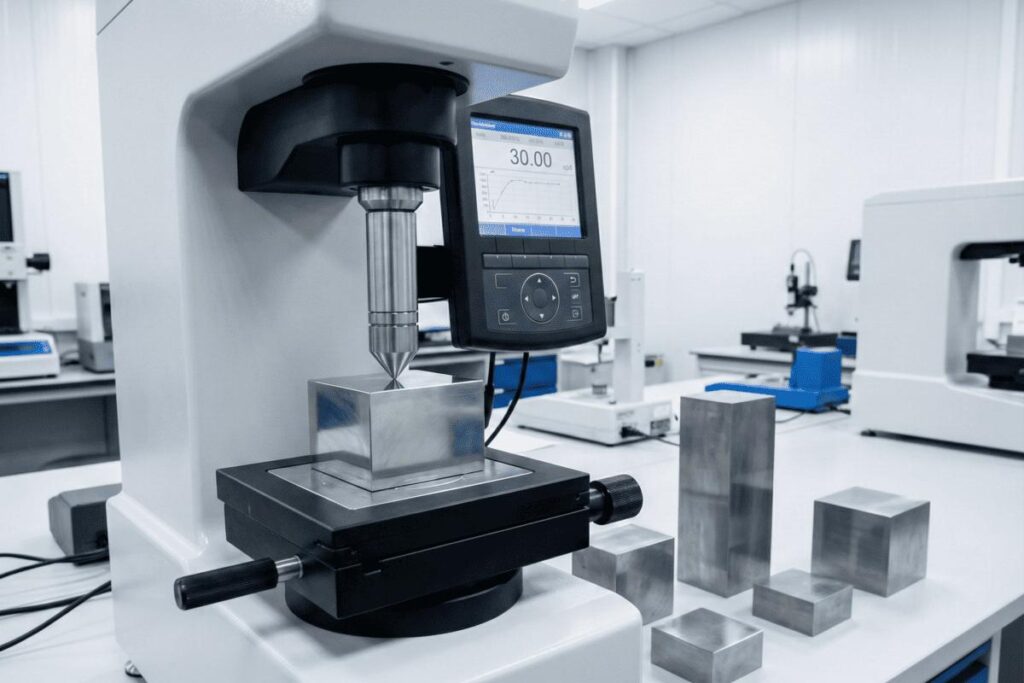
Mold steel hardness plays an important role in tooling performance. However, a hardness number means little without the corresponding steel grade and heat-treatment condition.
Pre-Hardened vs Through-Hardened Mold Steel
Steel suppliers provide prehardened mold steel at a specified hardness. Manufacturers can often machine this material into finished mold components without another full hardening cycle.
Through-hardening steels generally require a controlled heat-treatment process to reach their target working properties.
The appropriate process depends on the steel grade, component geometry, dimensional tolerances, and performance requirements.
For example, a manufacturer may use a prehardened P20 grade for a conventional cavity block while specifying hardened H13 for an insert that faces heavier loading.
S136-type stainless mold steels also require careful evaluation of their delivery condition and target working hardness.
When reviewing specifications, confirm:
- Steel grade and manufacturer
- Delivery hardness
- Required final working hardness
- Heat-treatment process
- Inspection method and acceptance range
Do not compare hardness figures from different suppliers without checking their material specifications and test methods.
Wear Resistance and Mold Service Life
Steel hardness alone cannot guarantee a longer mold life.
Gate design, resin abrasiveness, operating pressure, mold temperature, part geometry, and maintenance all influence wear.
A manufacturer may improve serviceability by using replaceable inserts in areas that experience concentrated wear.
This approach can simplify repairs and reduce the need to replace larger mold components.
Buyers should discuss expected production volume, operating conditions, and maintenance requirements instead of relying on a fixed shot-count promise.
Polishability and Surface Finish Requirements
Surface finish requirements can strongly influence mold steel selection.
A textured industrial housing may not need the same material cleanliness or polishing capability as a transparent optical cover or high-gloss cosmetic part.
Engineers often consider S136-type steels when corrosion resistance and high polishability matter.
However, the final result also depends on machining quality, EDM finishing, polishing methods, and material cleanliness.
Clearly define the required surface finish in the tooling specification. A general instruction such as “mirror finish” may not provide enough detail for consistent technical approval.
Should Every Mold Component Use the Same Steel?
No. An injection mold contains multiple components that perform different functions.
Using an expensive steel throughout the entire mold can increase tooling costs without delivering a meaningful benefit.
Mold Base vs Core and Cavity Steel
The mold base supports and positions the tooling assembly.
Cavities and cores shape the plastic part directly, so they face different pressure, temperature, wear, and surface-finish requirements.
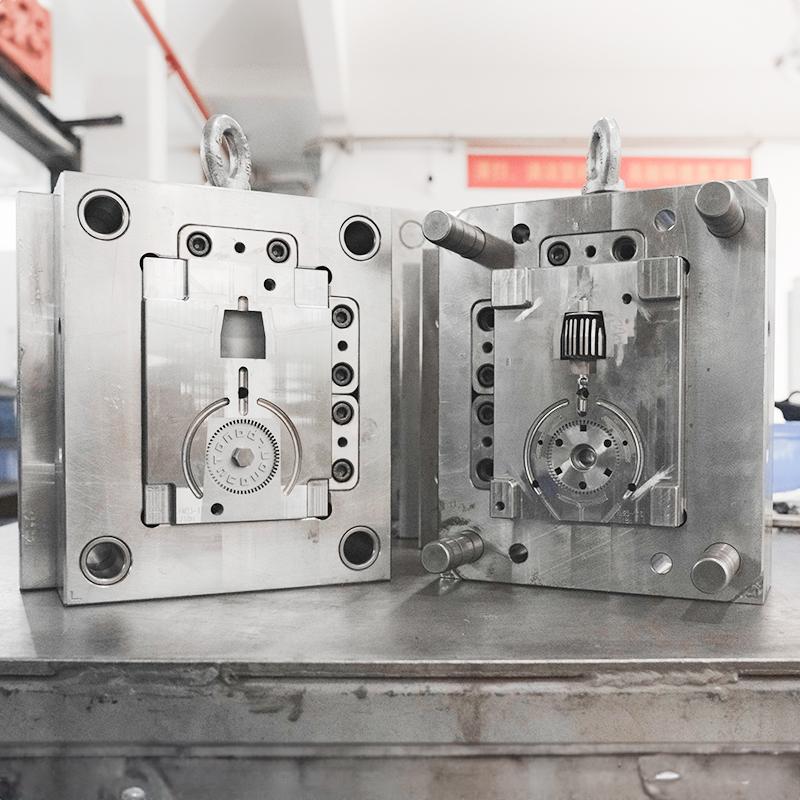
Manufacturers may therefore combine standard mold-base materials with different steels for cores, cavities, and selected inserts.
The project specification should identify the material requirements for each important component.
PALUM’s mold manufacturing services cover mold design, precision machining, fitting, assembly, and tool trials. Engineers coordinate these stages to match material choices with the mold structure and production requirements.
Selecting Steel for Inserts, Slides and Wear Areas
Certain mold features require additional attention.
Thin cores, small inserts, sliding mechanisms, and shutoff surfaces may experience concentrated loads or repeated friction.
Engineers can address these challenges through suitable steel grades, heat treatment, surface coatings, or replaceable components.
This approach can help control tooling costs while improving maintenance efficiency and production reliability.
When Is Higher-Cost Mold Steel Worth Considering?
The cheapest mold quotation does not always deliver the lowest production cost.
However, a higher-priced steel must offer a clear technical advantage for the intended application.
Initial Tooling Cost vs Long-Term Production Cost
Material choice affects more than the initial steel purchase.
It can influence machining time, heat-treatment expenses, polishing work, maintenance, repair, component replacement, and unplanned downtime.
A conventional prehardened steel may provide an economical solution for limited production runs.
For demanding long-term programs, a more suitable cavity material or wear-resistant insert may reduce future maintenance and quality problems.
Buyers should compare these factors against actual production requirements rather than selecting steel by price alone.
Evaluating Steel Selection for High-Volume Programs
Before approving a higher-cost steel option, ask:
- What annual production volume do we expect?
- How many cavities will the mold contain?
- Which areas face the greatest wear or corrosion risks?
- What dimensional and appearance requirements must remain consistent?
- What maintenance activities will the mold need?
- Does the steel upgrade benefit the entire mold or only selected components?
These questions help distinguish necessary engineering investment from unnecessary material upgrades.
What Should Buyers Confirm Before Approving Mold Steel?
Overseas buyers should request clear material specifications before approving a tooling quotation.
A statement such as “high-quality imported mold steel” does not provide enough technical detail for verification.
Steel Grade, Supplier and Material Certification
Ask the manufacturer to identify the exact steel grade, applicable standard or manufacturer designation, and supply condition.
Where the project requires traceability, define the necessary material certificates and supporting records.
Do not assume that two similar steel designations guarantee identical properties.
Differences in composition, cleanliness, heat treatment, and manufacturing processes may affect the final result.
Required Hardness, Heat Treatment and Inspection Records
The tooling specification should identify which components require heat treatment and their target final hardness.
For demanding projects, buyers can request relevant material certificates, heat-treatment reports, or hardness inspection results as part of the agreed documentation package.
These records offer a more reliable basis for technical approval than a general steel name.
What to Include in a Mold Steel Selection RFQ
Provide the following information when requesting an engineering review or tooling quotation.
| RFQ Information | Why It Matters |
|---|---|
| 3D CAD and 2D part drawings | Defines geometry and critical features |
| Exact plastic resin grade | Identifies fillers, processing conditions, and corrosion risks |
| Annual and total production volume | Supports mold-life planning |
| Cavity count and target cycle time | Influences production loading and tool design |
| Surface finish requirements | Guides material and polishing decisions |
| Critical tolerances | Identifies dimensional stability requirements |
| Expected tooling life | Helps evaluate material and maintenance options |
| Required steel standards | Defines purchasing and acceptance requirements |
| Material and hardness documentation | Supports verification of agreed specifications |
PALUM provides DFM and engineering support for manufacturability evaluation, mold design, material selection, and technical review.
Sharing complete project requirements early helps the engineering team evaluate steel options alongside mold design, production conditions, and tooling costs.
Frequently Asked Questions About Injection Mold Steel
Can P20 steel support long-term injection molding production?
Yes. P20-type steel can support long-term production when its properties match the mold’s operating conditions. Resin type, production volume, wear, and maintenance requirements all influence its suitability.
Is H13 always better than P20 for injection molds?
No. H13 offers advantages in certain demanding applications, but many conventional molds perform well with suitable P20 grades. Engineers should select steel according to the actual loading and production requirements.
Which mold steel works best for corrosive plastic materials?
Corrosion-resistant steels such as S136 may suit applications with elevated corrosion risks. The engineering team should also assess resin formulation, processing temperature, moisture exposure, and required hardness.
Does higher mold steel hardness guarantee longer mold life?
No. Hardness can improve resistance to certain forms of wear, but toughness, resin abrasiveness, heat treatment, mold design, and maintenance also influence service life. Excessive hardness can introduce other failure risks.
What information should buyers provide for mold steel selection?
Provide part drawings, the exact resin grade, expected production volume, cavity requirements, critical tolerances, and surface-finish specifications. These details help the manufacturer recommend suitable steel and tooling configurations.
Send Your Part Drawing for Mold Steel Recommendation
Choosing between P20, H13, S136, or another tool steel starts with understanding your plastic part and production requirements.
PALUM manufactures custom injection molds and provides engineering review, mold design, precision machining, assembly, and production trials.
For your next tooling project, share your 3D model or 2D drawings, resin specifications, expected order volume, and surface-finish requirements.
Our engineering team can review your application and discuss suitable mold materials, component configurations, and manufacturing considerations before preparing a quotation.
Contact PALUM for a Mold Steel Selection Review and Tooling Quote