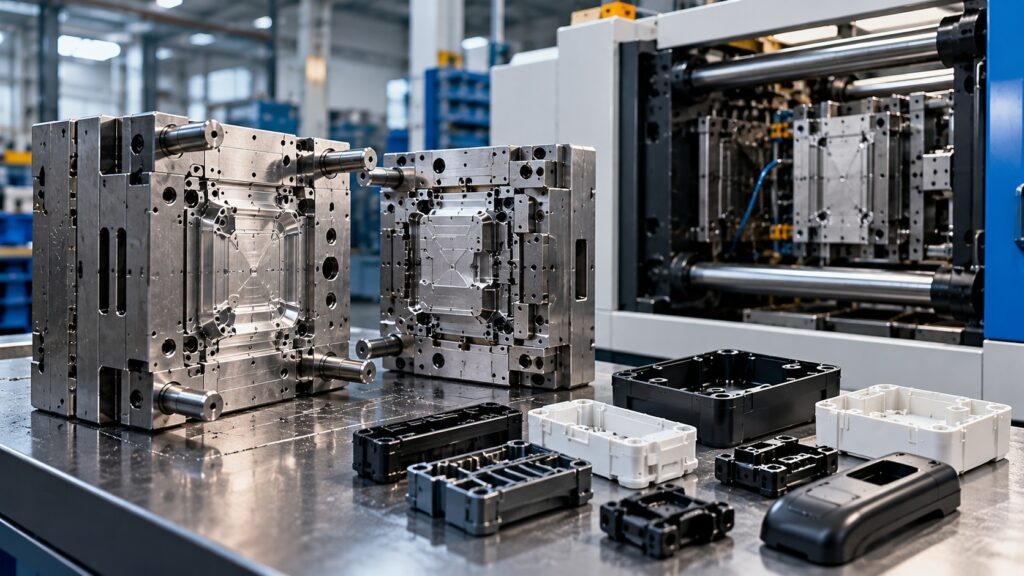
How long does it take to manufacture an injection mold? For B2B buyers planning a new plastic product, injection mold lead time is one of the most important factors in the overall project schedule.
As an illustrative planning reference, a relatively simple injection mold may reach its first trial in approximately 3–5 weeks, while a standard production mold may require around 5–8 weeks. Complex, multi-cavity, or high-precision tooling can take 8–12 weeks or longer. These are broad planning estimates, not guaranteed industry averages or PALUM delivery commitments.
The actual schedule depends on part geometry, design approval, steel and component availability, machining capacity, assembly, and mold trial results. It also matters whether a supplier is quoting the time to the first trial, the dispatch of T1 samples, or final production approval.
This guide explains the key stages of injection mold manufacturing, what affects tooling and T1 sample delivery, and how buyers can build a more reliable project timeline.
How Long Does It Take to Make an Injection Mold?
Injection mold manufacturing lead time varies because every mold is designed for a specific plastic part and production requirement. A straightforward single-cavity tool generally involves fewer manufacturing operations than a multi-cavity mold with slides, lifters, hot runners, or demanding dimensional requirements.
The following table provides illustrative planning ranges for the period from approved tooling requirements to the first mold trial. Actual schedules must be confirmed for each project.
| Mold Category | Illustrative Time to First Trial | Typical Characteristics |
|---|---|---|
| Simple injection mold | 3–5 weeks | Simple part geometry, conventional tooling, limited special mechanisms |
| Standard production mold | 5–8 weeks | Production tooling with defined quality and dimensional requirements |
| Complex or high-precision mold | 8–12 weeks or longer | Multiple cavities, complex actions, demanding tolerances, or specialized components |
These ranges are illustrative scheduling examples. They are not verified PALUM production lead times. Component sourcing, design changes, supplier workload, holidays, and validation requirements may produce shorter or longer schedules.
Buyers should confirm exactly when the quoted lead time begins. Some manufacturers start counting after purchase order confirmation, while others start only after the final mold design is approved and required deposits or technical documents are received.
They should also clarify what the quoted completion date represents:
- Completion of mold machining and assembly
- Completion of the first mold trial
- Availability of T1 samples and trial reports
- Dispatch or delivery of T1 samples
- Final sample approval and production readiness
These are different milestones. Treating them as one date can create unnecessary misunderstandings between buyers and suppliers.
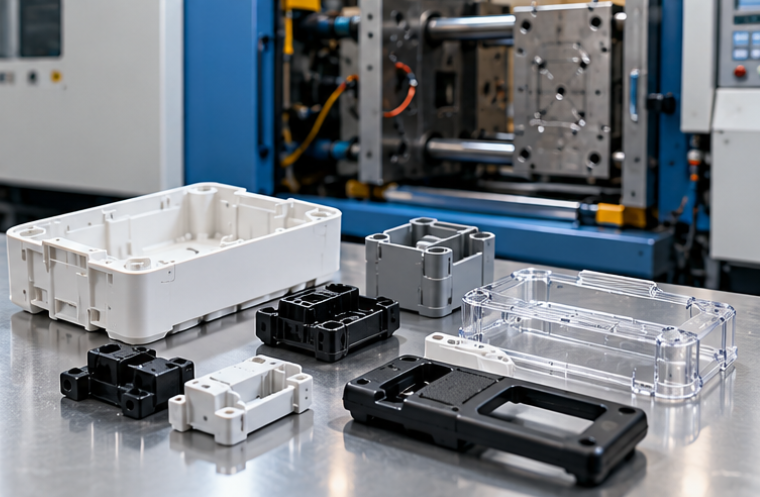
Injection Mold Manufacturing Timeline: From DFM to T1
A typical injection mold project passes through several engineering and manufacturing stages before the first trial. The stages are connected, but some activities can overlap when the design and production schedule allow.
1. DFM Review and Technical Confirmation
Design for manufacturability (DFM) is used to identify potential production problems before mold construction begins.
Engineers review wall thickness, draft angles, ribs, undercuts, parting lines, gate locations, ejection requirements, and other design features that affect mold construction and part quality.
For the buyer, this stage may require decisions about cosmetic surfaces, allowable gate marks, critical dimensions, material selection, and possible changes to the plastic part design.
Unresolved technical questions can delay the start of mold manufacturing. Completing the review early helps reduce the risk of expensive design changes after machining begins.
PALUM’s engineering support can be considered during this stage to evaluate manufacturing requirements before tooling decisions are finalized.
2. Mold Design and Material Preparation
After the main technical requirements are confirmed, the mold design defines the cavity and core arrangement, mold base, runner system, cooling channels, ejection mechanisms, and any special movements.
The supplier also prepares the required steel, standard mold components, and purchased systems such as hot runners where applicable.
Lead time can increase when a project requires unusual steel grades, custom components, or imported systems with extended delivery schedules.
Buyers should confirm whether critical materials and components are available before accepting an aggressive tooling schedule.
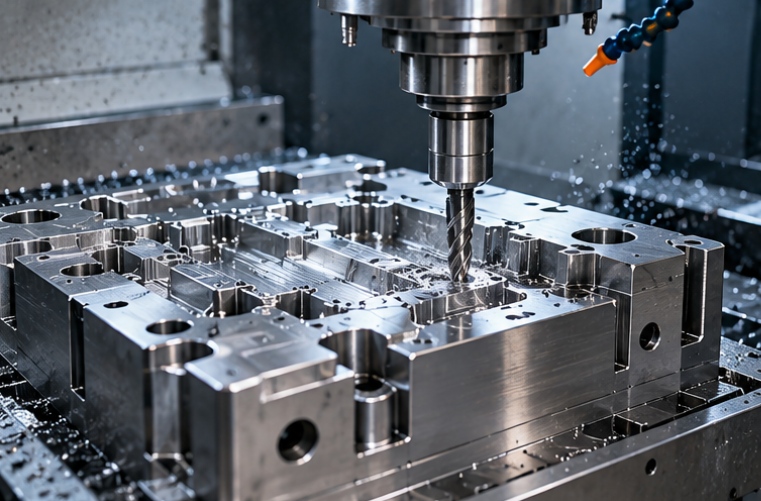
3. CNC, EDM, and Precision Machining
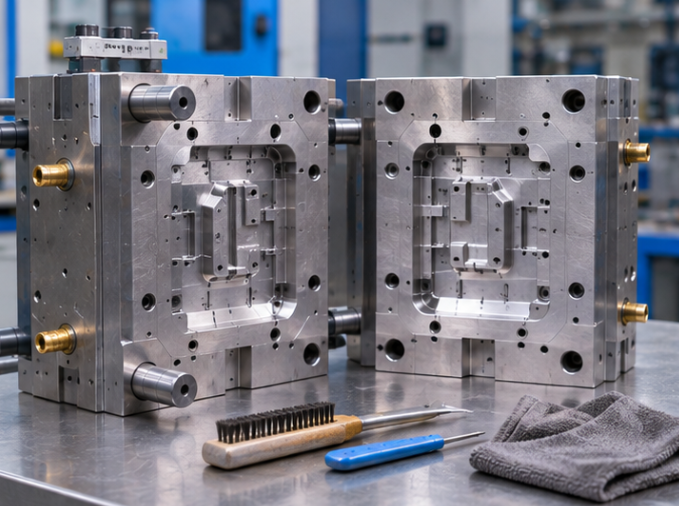
Machining is a major part of the mold manufacturing timeline. CNC milling, electrical discharge machining (EDM), wire cutting, grinding, and other operations are used to produce the required mold features.
Complex geometry can require additional machining setups, electrodes, inspection steps, and manual fitting.
High-precision features and demanding surface finishes may also require more processing time than standard mold surfaces.
PALUM’s custom mold manufacturing services cover the tooling operations involved in turning approved designs into production molds.
4. Mold Assembly and Internal Inspection
Once the major components have been manufactured, the mold is assembled and checked for proper movement, alignment, fitting, and mechanical function.
Slides, lifters, ejector systems, cooling connections, and other moving components must operate correctly before the mold is installed in an injection molding machine.
Internal inspection helps identify assembly or machining problems before the first trial.
Rushing this stage can create avoidable difficulties during sampling, so a realistic project schedule should include time for fitting and verification.
5. T1 Mold Trial and Initial Sample Preparation
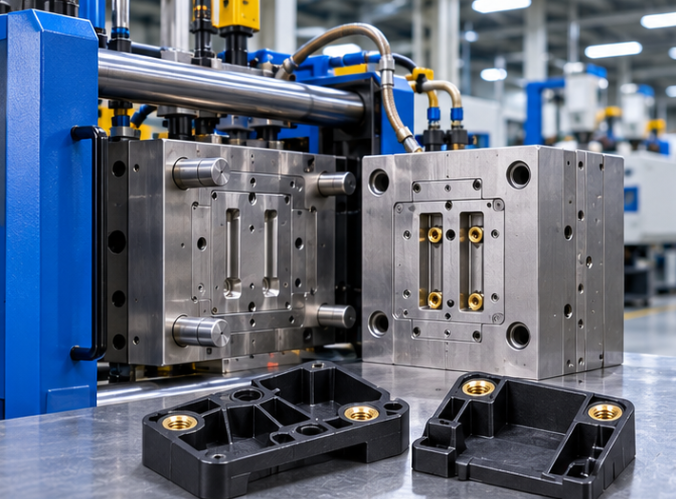
The T1 trial is the first planned molding trial used to evaluate the new tool under initial processing conditions.
During this stage, the manufacturer checks whether the mold can produce parts and identifies issues related to filling, cooling, ejection, dimensions, appearance, and other agreed requirements.
The resulting samples and trial observations provide information for the next engineering decisions.
Depending on the project, the supplier may need additional time after the trial for sample conditioning, dimensional inspection, reporting, packaging, and dispatch.
For this reason, the first trial date should not automatically be treated as the date when the customer will receive T1 samples.
What Is T1 Sampling, and When Will Buyers Receive Their Samples?
T1 refers to the first trial of a newly manufactured injection mold. It is an important engineering milestone, but it does not necessarily mean the mold or molded part is ready for mass production.
The main purpose of T1 sampling is to evaluate the tool and identify whether adjustments are required.
Buyers should distinguish three separate events:
| Milestone | Meaning |
|---|---|
| T1 trial date | The mold is tested and initial parts are produced |
| T1 sample dispatch | Selected samples and agreed documentation are prepared and shipped |
| T1 sample delivery | The buyer physically receives the samples for evaluation |
For an overseas buyer, shipping and customs procedures may add time after the trial and inspection have been completed.
Before the trial, agree on the required sample quantity, inspection criteria, dimensional reports, material information, and shipping method.
It is also useful to clarify who will review the samples, how feedback should be documented, and how quickly the supplier can respond to required changes.
Clear T1 deliverables make the schedule easier to manage and reduce the risk of disputes about whether a milestone has been completed.
Six Factors That Affect Injection Mold Lead Time
Injection mold lead time is influenced by both technical complexity and project coordination. The following factors are among the most important for B2B buyers to evaluate.
1. Part Complexity and Mold Mechanisms
Parts with complex undercuts, threads, deep ribs, or difficult ejection requirements may need slides, lifters, or other specialized mold mechanisms.
These features increase design, machining, fitting, and testing work.
Buyers can reduce unnecessary delays by reviewing whether difficult features are functionally required before approving the final design.
2. Design Changes and Approval Delays
Late design changes are a common source of tooling schedule disruption.
A modification to part geometry may require changes to the mold design, machining program, steel components, or assembly sequence.
To limit delays, buyers should establish a controlled drawing revision process and identify one responsible contact for technical approvals.
3. Steel and Component Availability
Standard materials and mold components may be available quickly, while special grades, custom hot-runner systems, and uncommon purchased parts can require additional procurement time.
Buyers should ask the manufacturer to identify long-lead components early and confirm whether approved alternatives are available.
4. Machining Capacity and Production Scheduling
A mold manufacturer may be working on several projects simultaneously. Machine availability, operator scheduling, and the order of machining operations can influence delivery dates.
Buyers should request a realistic project schedule rather than relying only on a general promise of fast delivery.
Progress milestones and timely communication are more useful than an unsupported completion date.
5. Tolerances, Surface Finish, and Inspection Requirements
Tight tolerances, complex measurement requirements, and demanding cosmetic finishes can increase machining and verification time.
For example, a precision sealing feature may require additional measurement and adjustment, while a highly polished cosmetic surface may require extensive finishing work.
Clearly identifying critical requirements helps the manufacturer allocate time to the features that matter most.
6. T1 Results and Required Mold Corrections
The first trial may reveal dimensional deviations, sink marks, warpage, flash, short shots, or other molding problems.
Some issues can be improved through process adjustments. Others may require mold modifications, additional machining, or another trial.
Buyers should include reasonable contingency time between T1 and final production approval rather than assuming that every mold will be accepted after the first trial.
Why T1 Samples May Need T2 or Additional Mold Trials
A successful T1 trial provides valuable information, but first-trial samples may not meet every final specification.
After reviewing the T1 samples, the customer and manufacturer may identify changes related to dimensions, assembly fit, appearance, filling behavior, or other agreed acceptance criteria.
If mold modifications are required, the supplier may carry out additional machining, fitting, or process adjustments before conducting a second trial, commonly referred to as T2.
The time required depends on the nature of the correction.
A minor process adjustment may be resolved relatively quickly. A major change to a cavity, core, slide, or cooling arrangement can require substantially more work.
Not every project needs the same number of trials. The important scheduling decision is to leave room for sample review and corrective action before committing to a production launch date.
For buyers, a documented feedback process is essential. Each requested change should identify the affected feature, acceptance requirement, responsible party, and expected completion date.
How Can Buyers Reduce Injection Mold Lead Time?
Shortening tooling lead time does not always require faster machining. Many delays can be prevented through better technical preparation and project coordination.
Provide Complete CAD and Technical Requirements
Submit the latest 3D CAD files, 2D drawings, material specifications, critical tolerances, surface-finish requirements, and expected production volumes.
Incomplete or inconsistent documentation can create repeated clarification cycles before engineering work begins.
Complete DFM Decisions Before Tool Cutting
Review manufacturability recommendations promptly and confirm which design changes are approved.
Freezing the design before steel cutting reduces the likelihood of major revisions during manufacturing.
Confirm Critical Materials and Components Early
If the project requires specific tool steels, hot-runner brands, or other purchased components, confirm their availability during the planning stage.
Early procurement decisions can prevent avoidable waiting later in the schedule.
Agree on Milestones and Approval Responsibilities
Establish a schedule that identifies engineering approval dates, mold design completion, machining milestones, assembly, T1, and sample dispatch.
Assign responsible contacts for technical questions and approval decisions on both sides.
Reserve Time for Trials, Corrections, and Shipping
A realistic tooling plan includes time for inspection, customer feedback, possible mold modifications, and international sample delivery.
Reducing this allowance to zero may make the schedule look attractive on paper, but it increases the risk of missing the final production target.
What Should an Injection Mold Delivery Schedule Include?
A useful injection mold production timeline should identify specific milestones and expected deliverables.
Before approving the project schedule, buyers should confirm the following:
| Project Milestone | What to Confirm |
|---|---|
| Technical requirements confirmed | Approved CAD revision, resin, tolerances, and cosmetic requirements |
| DFM review completed | Resolved engineering questions and approved design recommendations |
| Mold design approved | Approved mold layout and start authorization for manufacturing |
| Machining and assembly | Expected progress dates and any critical component dependencies |
| T1 mold trial | Planned trial date and initial evaluation requirements |
| T1 report and sample dispatch | Sample quantity, inspection documents, and shipping arrangement |
| Customer feedback | Review deadline and method for recording requested changes |
| T2 or final approval | Expected corrective action and additional trial requirements, if needed |
Buyers should also ask how the supplier will communicate schedule changes and whether revised milestones will be issued after significant engineering modifications.
For a project involving a new plastic product, it is helpful to coordinate tooling milestones with material procurement, assembly testing, packaging development, and production launch planning.
The tooling schedule should support the complete product development program rather than operate as an isolated manufacturing activity.
Frequently Asked Questions About Injection Mold Lead Time
How long does it take to manufacture an injection mold?
Injection mold manufacturing may take several weeks to several months, depending on mold complexity, component availability, machining requirements, and the definition of the delivery milestone. Simple tools may reach the first trial sooner than complex production molds. A project-specific schedule should identify the starting date, T1 trial date, and expected sample delivery date.
What does T1 mean in injection molding?
T1 is the first planned trial of a newly manufactured injection mold. It is used to produce initial samples and evaluate mold performance, part dimensions, appearance, and molding behavior. T1 samples may require further review or correction before the tool and molded parts are approved for production.
Does injection mold lead time include T1 sample shipping?
Not necessarily. Some suppliers quote lead time to the first mold trial, while others include sample inspection or dispatch. International transportation may add further time. Buyers should confirm whether the quoted date refers to T1 trial completion, sample shipment, or physical delivery at their facility.
What causes delays in injection mold manufacturing?
Common causes include incomplete drawings, late design changes, unavailable steel or components, complex machining, demanding inspection requirements, and mold corrections after T1. Delays can also result from slow customer approvals or unclear acceptance criteria. A milestone-based schedule helps identify these risks early.
Can injection mold lead time be shortened?
In some cases, yes. Complete technical documentation, early DFM decisions, timely approvals, and advance confirmation of critical materials can reduce avoidable delays. However, machining, inspection, assembly, and mold trials still require sufficient time to achieve the agreed quality requirements. Any accelerated schedule should be evaluated against the specific mold design.
Final Thoughts: Plan Around T1 and Final Approval
Injection mold lead time depends on much more than machining speed. Design approval, mold complexity, material availability, precision manufacturing, assembly, and trial results all influence the project schedule.
For B2B buyers, the most important distinction is between the first mold trial, delivery of T1 samples, and final production approval. Each milestone should have a clear definition, responsible contact, and realistic completion target.
When planning a new tooling project, share your latest CAD drawings, material requirements, production forecast, and target launch date with the manufacturer. PALUM can review the project requirements and discuss a suitable tooling development schedule through its project inquiry page.