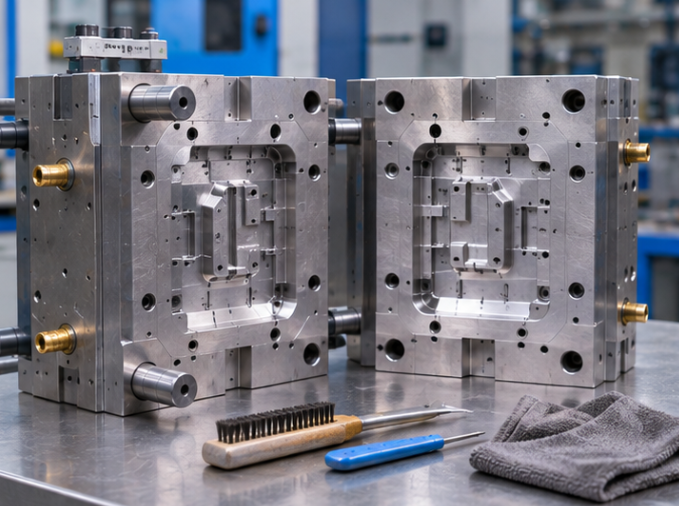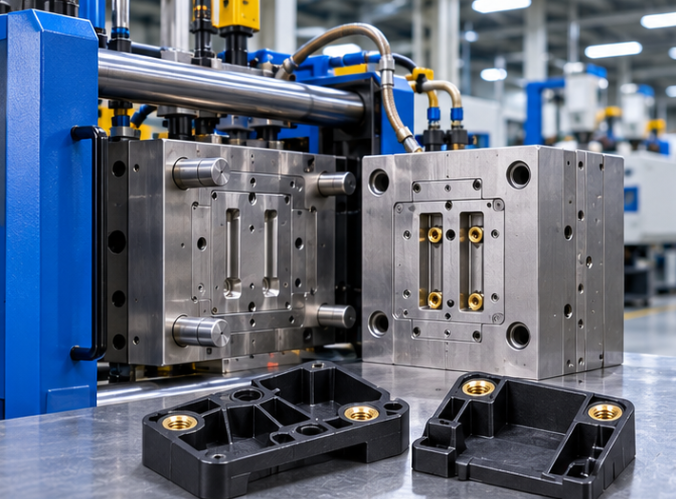

When a plastic part needs two colors, a soft-touch grip, or a combination of rigid and flexible materials, engineers often compare 2K injection molding vs overmolding. Both methods can create a single component with two material regions. However, they use different production arrangements, and those differences affect tooling, handling, cost, and quality control.
Integrated 2K molding often suits stable, high-volume programs that can justify specialized tooling and equipment. Conventional two-stage overmolding can offer more flexibility when a manufacturer already produces the substrate or needs to manage the two operations separately.
Neither method wins every comparison. The right process depends on material compatibility, part geometry, annual volume, appearance requirements, and the total cost per acceptable part.
Terminology note: In this article, 2K injection molding means an integrated two-shot process. Conventional overmolding means a two-stage process in which a manufacturer first makes a substrate and then places it in another mold for the second material. In broader industry usage, overmolding can also include certain two-shot processes.
What Is 2K Injection Molding?
2K injection molding, also called two-shot or two-component molding, uses two injection stages within an integrated manufacturing system. Depending on the equipment, a rotating platen, indexing mechanism, or rotating core moves the first molded section into position for the next shot.
- The machine injects the first material into the initial cavity.
- The tooling system moves the first molded section into the second-shot position.
- The machine injects the second material against or around the first section.
- The system cools and ejects the combined part for inspection.
Manufacturers use this approach for two-color housings, soft-touch components, and parts that need distinct material properties in specific areas. An integrated process can reduce separate handling and help control the relative position of both material regions.
However, the project usually needs compatible multi-component equipment and specialized tooling. Engineers must check the transfer mechanism, part geometry, and material behavior before they approve the mold concept.
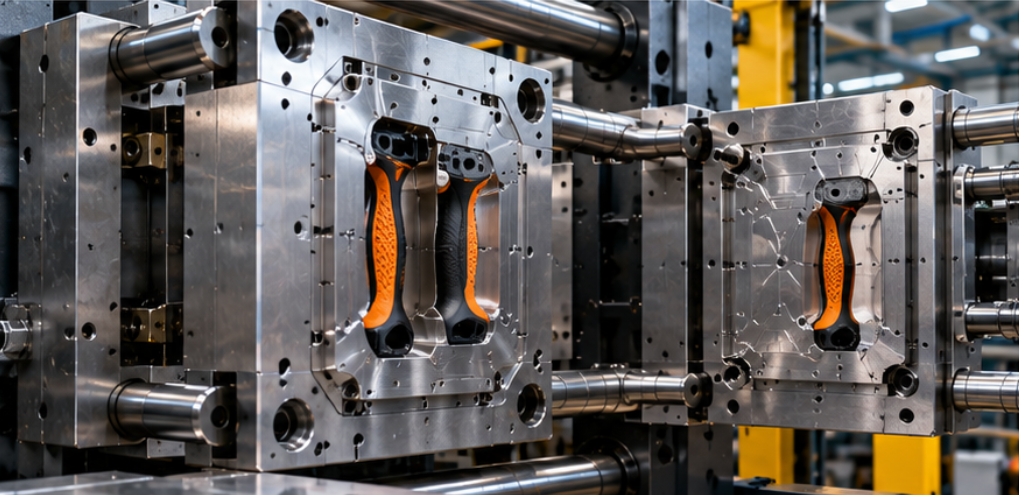
What Is Conventional Overmolding?
In conventional two-stage overmolding, a manufacturer adds a second material to an existing substrate. The substrate might be a molded plastic component, a metal insert, or another part that can tolerate the second molding operation.
- The manufacturer produces or obtains the substrate.
- An operator or automated system places the substrate in the second mold.
- The machine injects the additional material over selected areas.
- The team removes and inspects the finished component.
This arrangement often works well for protective coatings, soft grips, integrated sealing features, and products that already use a standard rigid component.
Separate operations also give manufacturers options for scheduling and product variants. For example, several finished products may share the same rigid substrate but use different overmold colors or textures.
That flexibility comes with responsibilities. The production team must control substrate positioning, cleanliness, dimensions, storage, and exposure to heat during the second shot.
2K Injection Molding vs Overmolding: Key Differences
The clearest comparison looks at the complete production route, not just the appearance of the finished part.
| Factor | 2K Injection Molding | Conventional Two-Stage Overmolding |
|---|---|---|
| Production sequence | An integrated system performs both shots. | The manufacturer makes a substrate before the second molding operation. |
| Equipment | Typically uses a multi-component molding machine. | Can use separate conventional machines or stations. |
| Tooling | Requires tooling that supports both shots and part transfer. | Typically uses substrate tooling and a separate overmold tool. |
| Handling | The machine or mold transfers the first section internally. | Operators or automation transfer the substrate between operations. |
| Initial investment | Specialized tooling and equipment can raise upfront costs. | Separate tools may offer flexibility but still create setup and handling costs. |
| Production volume | Often attractive for stable, high-volume programs. | Can support low or high volumes, depending on automation and economics. |
| Material bonding | Depends on material grades, interface conditions, and part design. | Depends on the same factors, plus substrate condition and handling. |
| Production flexibility | Uses a closely coordinated machine and tooling setup. | Allows the manufacturer to schedule both operations separately. |
| Quality focus | Requires control of both shots, positioning, and material interfaces. | Requires control of substrate placement, cleanliness, and the second shot. |
These are typical arrangements rather than universal rules. An automated two-stage overmolding cell can deliver high output and repeatable quality. Likewise, a complex 2K tool may struggle to justify its cost when demand remains low.
Buyers should compare the total cost per acceptable part over the expected product life, not only the mold quotation.
Five Factors That Determine the Right Process
1. Material Compatibility and Bonding
Start with the exact material grades. A rigid thermoplastic may pair with a TPE or TPU layer, but the material names alone do not prove that the interface will bond well.
Engineers must consider the resin grades, processing temperatures, interface condition, geometry, and intended service environment. Some combinations develop useful adhesion at the interface. Others need mechanical retention features such as holes, grooves, or interlocking shapes.
Neither process automatically produces a stronger bond. For seals, grips, or load-bearing interfaces, the team should define the performance requirement and validate the selected combination through appropriate testing.
2. Part Geometry and Mold Design
Part geometry influences how the manufacturer positions the first material and introduces the second. Engineers should review the overmold area, wall sections, undercuts, gate locations, parting lines, and ejection strategy.
In a 2K system, the mold must support both shots and the transfer mechanism. In conventional overmolding, the second tool must locate and support the substrate accurately during injection.
A design that works well with one arrangement may require substantial changes for the other. An early DFM for injection molding review helps the engineering team identify these constraints before tool cutting.
3. Tooling Investment and Production Cost
Tooling price and production cost tell different stories. Integrated 2K molding may need a more complex mold and compatible equipment. Conventional overmolding may need two tools, extra handling, intermediate storage, and another production operation.
When buyers compare quotations, they should ask suppliers to include:
- All mold and equipment-related investments
- Cycle time and machine rates for each operation
- Manual handling or automation costs
- Material consumption, scrap, and expected yield
- Inspection, maintenance, and future tooling changes
- Forecast production volume across the product life
A lower upfront tooling quote does not always lead to lower overall spending. Our injection mold cost guide explains the broader factors behind tooling quotations.
4. Expected Production Volume
High, stable demand can make an integrated 2K process attractive because the system may reduce separate handling and support a consistent production flow. The savings must still justify the specialized investment.
Conventional overmolding may suit smaller programs, uncertain forecasts, existing substrates, or products with several variants. With the right automation, it can also support substantial production volumes.
No single annual quantity marks the crossover point. Manufacturers should calculate the economics using realistic cycle times, equipment rates, handling requirements, scrap assumptions, and forecast demand.
5. Cosmetic, Dimensional, and Functional Requirements
Two-material parts often need more than an attractive color combination. A soft layer may provide grip, impact protection, vibration damping, or a sealing function.
Engineers should identify critical interfaces, acceptable color boundaries, visible gate marks, texture requirements, and dimensions that control assembly. For sealing or repeated-load applications, the team should also define suitable functional tests.
Both processes can meet demanding requirements when the material selection, mold design, and process controls suit the application. The better option is the one that manages the project’s most important risks at an acceptable cost.
Which Process Fits Common Product Applications?
These examples offer starting points for process evaluation. They illustrate possible decisions rather than documented PALUM customer projects.
| Application | Process to Evaluate | Key Question |
|---|---|---|
| High-volume two-color housing | 2K molding | Will integrated production justify the tooling investment? |
| Rigid handle with a soft grip | 2K or conventional overmolding | Which setup best balances bonding, volume, and cost? |
| Plastic layer around a metal component | Insert molding or conventional overmolding | Can the tool locate the insert and control thermal effects? |
| Several variants sharing one substrate | Conventional overmolding may offer flexibility | Can separate operations simplify variant management? |
| Integrated flexible seal | 2K or conventional overmolding | Which design meets the bonding and sealing requirements? |
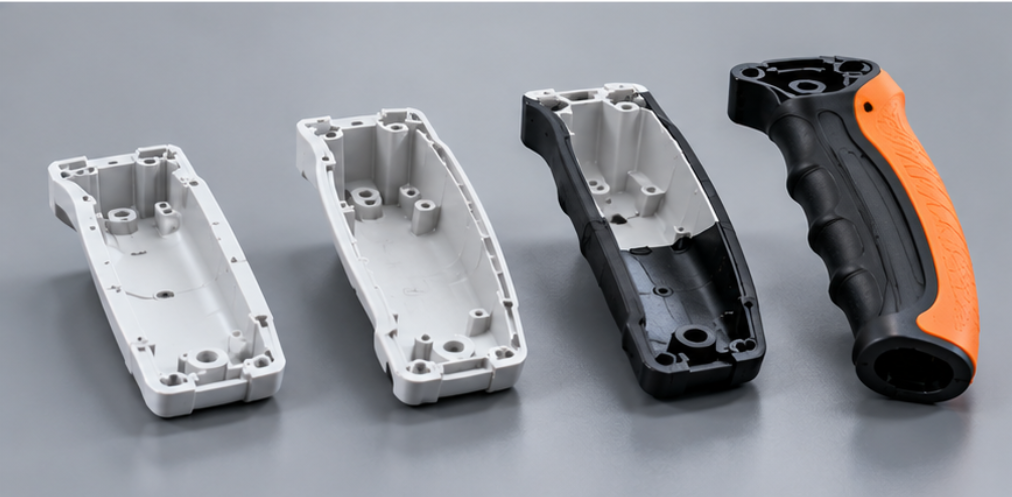
Example: A High-Volume Soft-Touch Handle
Imagine a rigid handle with a flexible grip area. If the design stays stable and demand remains high, the manufacturer may consider 2K molding to reduce substrate transfer and handling.
Before choosing that route, the team must confirm material compatibility, tool geometry, machine availability, and the investment payback. If the rigid handle already exists or the product has several variants, conventional overmolding may remain competitive.
Example: Plastic Over a Metal Insert
Now consider a metal component that needs a protective or insulating plastic layer. Engineers will generally start by evaluating insert molding or conventional overmolding because the metal component exists before plastic injection.
The review should cover insert location, thermal behavior, injection pressure, mechanical retention, and service conditions. The part requirements, rather than the process label, should determine the final tooling approach.
What Should Engineers Check Before Choosing 2K or Overmolding?
Before the team approves a mold concept, it should answer several practical questions:
- Do the exact material grades provide the required adhesion or mechanical retention?
- Can the first material tolerate the temperature and pressure of the second shot?
- Can the tooling position both material regions consistently?
- Will gates, parting lines, and ejection marks meet the appearance requirements?
- Does the geometry require slides, lifters, or other complex mechanisms?
- What tests will confirm bond strength, sealing, durability, or dimensional performance?
- Does the production forecast justify the proposed tooling and equipment?
Engineers should resolve major uncertainties before committing to production tooling. Where the project involves an unfamiliar material combination or demanding interface, they may recommend material trials, prototype testing, or other validation.
What Information Should Buyers Send for a Process Recommendation?
A clear RFQ package helps a manufacturer compare process options without relying on unnecessary assumptions. Buyers should share:
- 3D CAD models: Show both material regions and the intended final geometry.
- 2D drawings: Identify critical dimensions, tolerances, and assembly interfaces.
- Material details: List the preferred resin grades and any approved alternatives.
- Production forecast: Include annual demand, launch quantity, and expected product life.
- Functional targets: Explain grip, sealing, insulation, impact, or durability needs.
- Cosmetic requirements: Define colors, textures, visible surfaces, and acceptable marks.
- Existing components: State whether a supplier already makes the substrate.
- Project milestones: Share target sample, validation, and production dates.
If the team has not validated the material pair, say so in the RFQ. That information helps the manufacturer plan appropriate engineering checks before tooling approval.
Buyers should also discuss mold approval, manufacturing, trial, and sample milestones. Our injection mold lead time guide explains how those stages affect project planning.
Frequently Asked Questions About 2K Injection Molding and Overmolding
Is 2K injection molding the same as overmolding?
Not exactly. Overmolding describes a broad family of processes that add material over a substrate. Some manufacturers include integrated two-shot molding within that category. In this comparison, 2K means an integrated two-shot system, while conventional overmolding means a separate second molding operation.
Is 2K injection molding more expensive than overmolding?
2K molding can require a larger initial investment in specialized tooling and equipment. Conventional overmolding may involve separate molds and additional handling. The lower-cost option depends on volume, cycle time, automation, yield, and the complete tooling arrangement. Compare the full project economics rather than the initial mold price alone.
Which process provides better material bonding?
Neither method guarantees stronger bonding. The exact material grades, interface temperatures, surface condition, part geometry, and mechanical retention features determine the result. Engineers should select a compatible material combination and test the finished interface against the product’s functional requirements.
Is 2K molding better for high-volume production?
Integrated 2K molding can work well for stable, high-volume programs because it may reduce separate handling. However, automated conventional overmolding can also support high output. Compare tooling investment, equipment availability, cycle time, yield, and the expected production life before making the decision.
Can overmolding be used for metal inserts?
Yes. Manufacturers can mold plastic around suitable metal components through insert molding or an overmolding process. Engineers must evaluate insert positioning, thermal effects, injection conditions, retention features, and service requirements. Testing helps confirm whether the finished component meets its performance targets.
Final Thoughts: Choose the Process Around the Part
The best answer to 2K injection molding vs overmolding starts with the finished part. Integrated 2K molding may suit a stable, high-volume two-material design. Conventional overmolding may offer more flexibility for existing substrates, product variants, or separate production operations.
Material compatibility, part geometry, production volume, total cost, and quality requirements should guide the decision. If you are developing a two-material plastic component, share your CAD files, preferred materials, and expected quantities through the PALUM project inquiry page to discuss the manufacturing options worth evaluating before tooling investment.