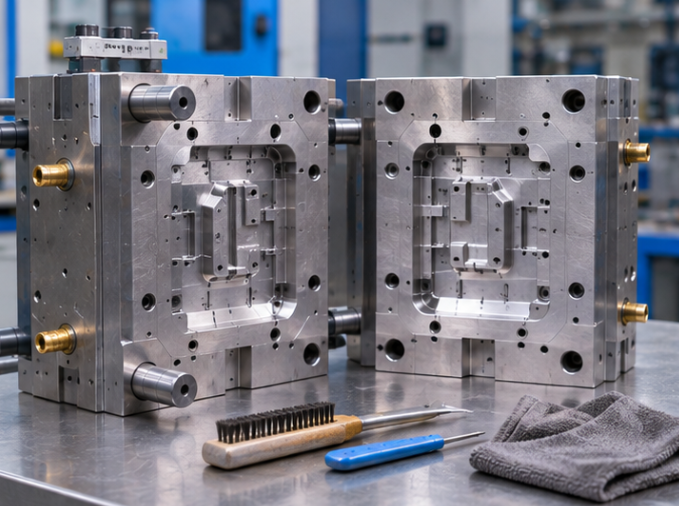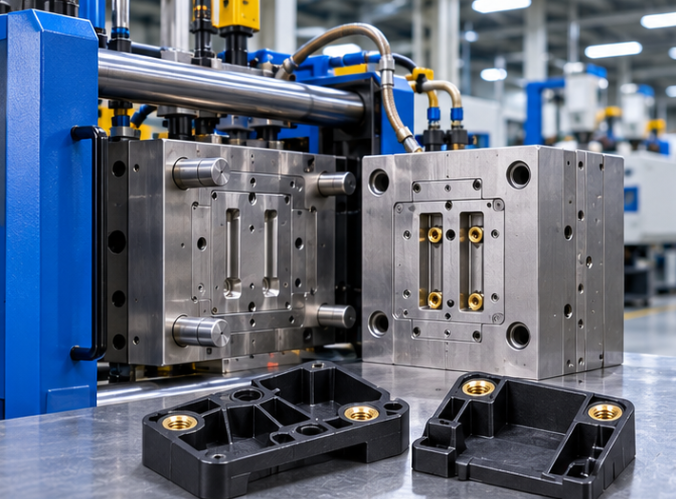

Choosing between a hot runner vs cold runner mold affects tooling investment, material consumption, production efficiency, maintenance, and the long-term cost of injection molded parts.
A hot runner system uses heated components to keep plastic molten inside the mold’s distribution channels. A cold runner system allows the plastic in its runner channels to cool and solidify during each molding cycle.
Hot runner molds can reduce solidified runner material and may improve production efficiency in suitable applications. However, they generally require a higher initial investment and more complex temperature control. Cold runner molds usually offer simpler construction and lower initial tooling costs, but they may generate additional runner material during production.
Neither system is automatically better. The right choice depends on the plastic material, part design, annual production volume, cycle time, runner weight, maintenance requirements, and total manufacturing cost.
This guide compares both systems and explains how OEM buyers and engineers can evaluate their practical advantages before committing to a mold design.
What Is a Hot Runner Injection Mold?
A hot runner injection mold uses a heated distribution system to deliver molten plastic from the injection molding machine into the mold cavities.
The system maintains suitable temperatures within its flow channels so the plastic does not solidify into a conventional runner that the mold must eject after every cycle.
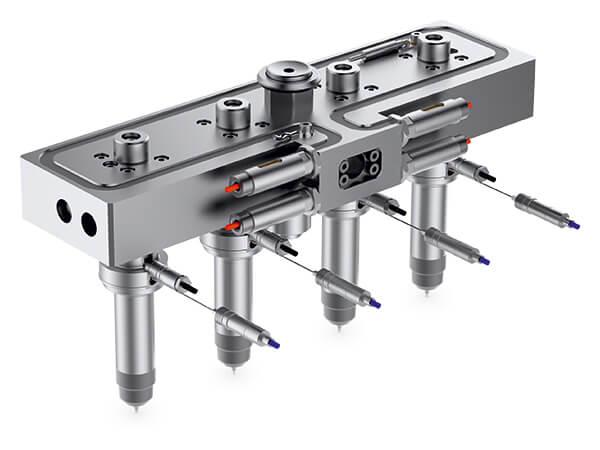
A typical hot runner arrangement includes several key components:
- Heated manifold: Distributes molten plastic toward the mold cavities.
- Heated nozzles: Deliver material from the manifold toward the gates.
- Temperature-control system: Regulates the thermal conditions of the heated components.
- Associated heaters and sensors: Support temperature monitoring and control.
Depending on the application, engineers may use open-gate or valve-gate configurations.
Hot runner systems can reduce the solidified runner material that conventional cold runner molds produce. This advantage becomes particularly relevant when the plastic material is expensive or production volume is substantial.
However, hot runner injection molding does not eliminate every source of plastic waste. Startup purging, color changes, process adjustments, and rejected parts can still consume material.
Engineers must also evaluate material stability, residence time, thermal control, and the maintenance needs of the selected system.
What Is a Cold Runner Injection Mold?
A cold runner injection mold uses unheated runner channels within the mold to distribute molten plastic to the cavities.
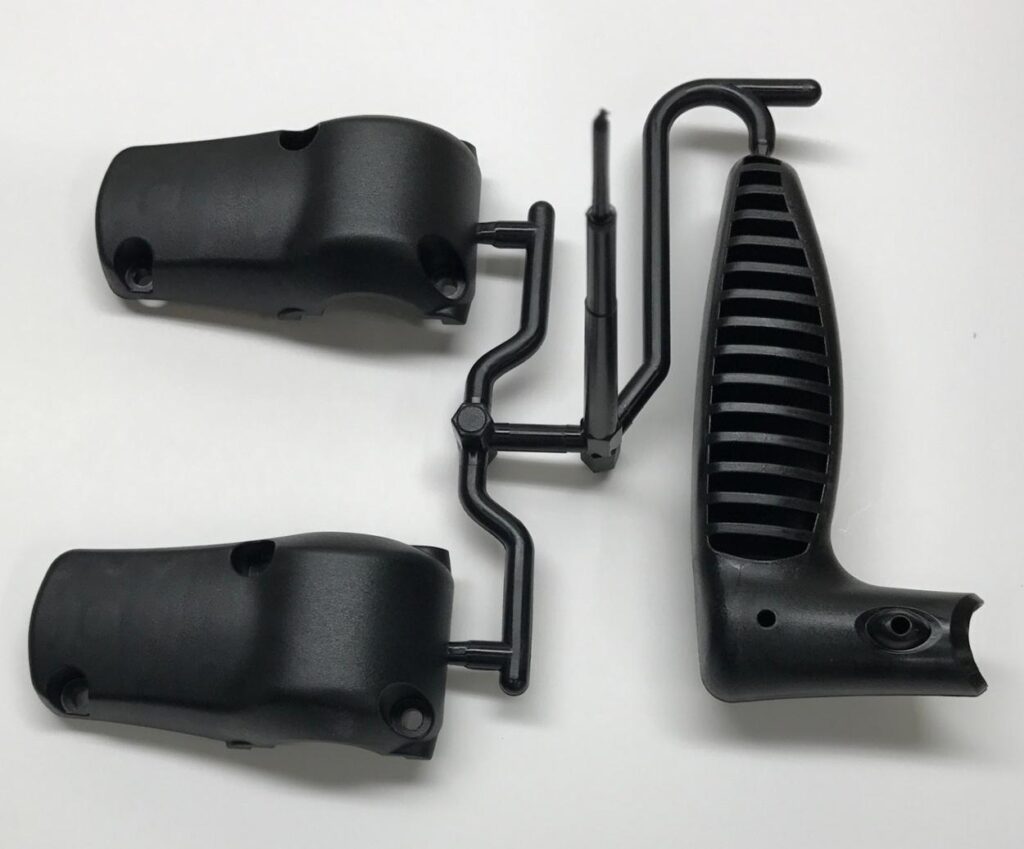
During the molding cycle, the plastic fills both the cavities and the runner channels. The runner material then cools and solidifies along with the molded parts.
When the mold opens, the system ejects or releases the solidified runner, depending on the tooling arrangement.
Cold runner systems can use different mold configurations, including two-plate and three-plate designs.
They often provide a practical option for projects that require relatively straightforward tooling, lower initial investment, or frequent material changes.
Cold runner molds may also simplify certain maintenance tasks because they do not require a heated manifold and associated temperature-control components.
However, the runner material can increase the amount of plastic consumed during each cycle.
Some applications allow manufacturers to regrind and reuse suitable runner material. Others restrict or prohibit regrind because of material performance, appearance, cleanliness, traceability, or customer requirements.
Therefore, buyers should not assume that every cold runner becomes unusable waste. The actual material cost depends on runner weight and the approved material-handling process.
Hot Runner vs Cold Runner: Key Differences
The main difference between hot runner and cold runner injection molds is how each system manages plastic material inside the runner channels.
That difference affects tooling construction, material use, process control, and production economics.
| Comparison Factor | Hot Runner Mold | Cold Runner Mold |
|---|---|---|
| Runner temperature | Uses heated flow channels to maintain molten plastic | Allows runner material to cool and solidify |
| Initial tooling investment | Usually higher | Usually lower |
| Solidified runner material | Usually reduces or eliminates conventional runner ejection | Typically produces solidified runners |
| Production cycle time | May reduce runner-related cooling requirements | Runner cooling may affect the molding cycle |
| Mold complexity | Requires heated components and temperature control | Generally simpler construction |
| Maintenance | Requires attention to heaters, sensors, nozzles, and thermal control | Usually simpler runner-system maintenance |
| Color and material changes | May require additional purging | Often easier to clean in suitable designs |
| Material compatibility | Requires review of thermal stability and residence time | May offer advantages for some temperature-sensitive applications |
| Typical production fit | Often attractive for stable, higher-volume programs | Often attractive for lower-volume or cost-sensitive programs |
These comparisons describe common engineering trends rather than absolute rules.
A well-designed cold runner mold can support efficient high-volume production. Likewise, a hot runner system may suit a lower-volume project when material savings, part quality, or other technical requirements justify its cost.
Buyers should evaluate both options for the same part, resin grade, production forecast, and quality specification.
How Do Hot and Cold Runner Systems Affect Material Waste?
Material consumption is one of the most important differences between hot runner and cold runner tooling.
In a conventional cold runner system, each molding cycle produces both the required plastic parts and the solidified runner material.
With a hot runner system, the heated distribution channels generally retain molten material between cycles, reducing the need to produce and remove a conventional solid runner.
Example: Calculating Cold Runner Material
Consider a hypothetical four-cavity injection mold with the following characteristics:
- Finished part weight: 20 g per part
- Number of cavities: 4
- Total finished part weight per cycle: 80 g
- Cold runner weight per cycle: 16 g
- Total injected material per cycle: 96 g
The runner’s share of the total shot weight is:
Runner Material Percentage = Runner Weight ÷ Total Shot Weight × 100%
16 g ÷ 96 g × 100% = 16.7%
In this example, approximately 16.7% of the injected material forms the cold runner rather than the finished parts.
For 100,000 molding cycles, the total solidified runner weight would equal:
16 g × 100,000 = 1,600,000 g = 1,600 kg
This represents 1,600 kg of runner material over the example production quantity.
However, it does not automatically represent 1,600 kg of discarded material.
If the manufacturer can recover and reuse some of the runner material under approved conditions, the net material loss may be lower.
The actual financial benefit of switching to a hot runner system depends on resin price, allowable regrind, scrap handling, and the hot runner system’s own material losses.
All figures in this example are hypothetical and do not represent a specific PALUM production process.
Why Material Type Matters
Some plastic materials are expensive, and even a relatively small runner weight can affect production economics.
Other materials may support controlled regrind use, reducing the financial impact of cold runner material.
Engineering requirements may also prohibit regrind for certain components.
Before comparing runner systems, buyers should confirm the exact resin grade, material cost, and any restrictions on recycled processing material.
How Do Hot Runner and Cold Runner Molds Compare in Cycle Time?
Injection molding cycle time includes filling, packing, cooling, mold opening, ejection, and other necessary machine movements.
A hot runner system may shorten the molding cycle when the cold runner requires more cooling time than the finished part.
For example, a thick cold runner may remain too soft for reliable ejection even after the molded component has cooled sufficiently.
In that situation, removing the conventional cold runner could reduce a cycle-time limitation.
However, the finished part may still control the cycle time.
If the plastic component has thick walls or requires extended cooling to maintain dimensional stability, switching to a hot runner may produce little or no cycle-time improvement.
Engineers should evaluate:
- Part wall thickness and geometry
- Cold runner dimensions and cooling behavior
- Plastic material properties
- Packing and cooling requirements
- Mold opening and ejection movements
- Injection molding machine capability
A hot runner system may reduce cycle time when runner cooling limits production, but it does not guarantee a faster cycle for every molded part.
Buyers should request realistic cycle-time estimates for both proposed mold configurations.
For projects that also require cavity-count decisions, our guide to single-cavity vs multi-cavity molds explains how cavity quantity and cycle time influence production output.
How Do Hot and Cold Runner Systems Affect Total Production Cost?
Buyers should compare the total cost of producing acceptable parts rather than selecting a runner system based only on its initial tooling quotation.
The cost comparison should include tooling investment, material consumption, machine operating time, maintenance, and any additional production requirements.
Initial Tooling Cost
Hot runner molds generally require a higher initial investment because they include heated manifolds, nozzles, electrical components, temperature controls, and related engineering work.
Cold runner molds often use simpler distribution channels and may require fewer specialized components.
However, mold size, cavity count, part complexity, and the selected runner design also influence the final quotation.
A hot runner mold does not have a fixed price premium that applies to every project.
Our injection mold cost guide explains other tooling factors that buyers should consider when comparing quotations.
Material and Processing Cost
Hot runner tooling may reduce material consumption by avoiding conventional solidified runners.
It may also reduce certain runner-handling operations.
However, buyers should account for electricity consumption, system maintenance, startup purging, and any additional operating costs.
Cold runner systems may generate more solidified runner material, but approved regrind can reduce the net material cost in suitable applications.
Manufacturers should calculate these differences using the actual part weight, runner weight, material price, and production plan.
Maintenance and Downtime
Hot runner systems introduce additional components that may require inspection, repair, or replacement.
Problems involving heaters, sensors, nozzles, or material leakage can affect production and maintenance costs.
Cold runner systems generally avoid these particular thermal-control components, although they still require normal mold maintenance.
For long-running programs, buyers should consider spare parts, maintenance access, and the expected support requirements of the selected runner system.
Calculate Total Project Cost
A simplified comparison uses the following formula:
Total Project Cost = Initial Tooling Cost + (Production Cost per Good Part × Required Good Parts)
The unit production cost should include the applicable material, machine, labor, maintenance, and other manufacturing expenses.
Both options must use comparable assumptions and quality requirements.
This calculation provides a starting point. A more complete financial evaluation may also include financing, inventory, downtime risk, and other project-specific costs.
When Does a Hot Runner Mold Become Cost-Effective?
A hot runner mold becomes financially attractive when its production savings justify the additional tooling investment.
The break-even point depends on the difference in initial tooling cost and the net savings per acceptable finished part.
Example: Hot Runner Investment Payback
Consider a hypothetical project with two tooling options:
| Cost Item | Cold Runner Mold | Hot Runner Mold |
|---|---|---|
| Initial tooling cost | $12,000 | $22,000 |
| Additional tooling investment | — | $10,000 |
| Assumed production cost per good part | $0.50 | $0.42 |
| Net production savings per good part | — | $0.08 |
In this example, the hot runner option requires an additional $10,000 in initial tooling investment.
It also reduces the assumed production cost by $0.08 per acceptable part.
Use the following formula:
Break-Even Volume = Additional Tooling Investment ÷ Net Savings per Good Part
$10,000 ÷ $0.08 = 125,000 good parts
At 125,000 acceptable parts, both options reach the same simplified total project cost.
For the cold runner mold:
$12,000 + (125,000 × $0.50) = $74,500
For the hot runner mold:
$22,000 + (125,000 × $0.42) = $74,500
At 250,000 acceptable parts, the cost comparison changes:
- Cold runner: $12,000 + (250,000 × $0.50) = $137,000
- Hot runner: $22,000 + (250,000 × $0.42) = $127,000
Under these assumptions, the hot runner option saves $10,000 over the 250,000-part program.
These values are illustrative and do not represent PALUM quotations or guaranteed production savings. The assumed $0.08 saving must reflect the net difference in production costs, including the applicable operating and maintenance expenses.
Production timing also matters.
A program that reaches 125,000 parts within several months has a different investment profile from one that reaches the same quantity over several years.
Buyers should consider expected product life, forecast reliability, available capital, and production capacity before choosing the higher-investment option.
What Are the Maintenance and Material Compatibility Risks?
Runner-system selection involves more than tooling price and material consumption.
Maintenance access, material behavior, and production changeovers can influence long-term operating performance.
Heater, Sensor, and Temperature-Control Maintenance
Hot runner systems depend on stable thermal control.
Heaters, temperature sensors, electrical connections, nozzles, and related components require suitable monitoring and maintenance.
Temperature-control problems can affect material flow, filling behavior, and production stability.
Engineering teams should consider component accessibility, replacement requirements, and available technical support.
Cold runner systems avoid the heated distribution components of a conventional hot runner, but they still require maintenance of gates, runner surfaces, mold components, and other tooling features.
Color Changes and Material Purging
Production programs that frequently change colors or resin grades need a practical material-changeover strategy.
Hot runner systems can retain material within heated channels, which may increase purging requirements for some color or material changes.
Cold runner systems may offer easier material changes in suitable mold arrangements because they contain fewer heated internal flow passages.
However, actual changeover performance depends on runner design, resin behavior, and operating procedures.
Buyers should include expected color-change frequency when comparing tooling options.
Heat-Sensitive Materials and Residence Time
Some plastic materials require careful control of processing temperature and residence time.
Excessive thermal exposure can affect material quality, appearance, or processing behavior.
Engineers must therefore review whether the proposed hot runner system provides suitable temperature control and flow conditions for the selected resin.
Material compatibility should depend on the exact resin grade, supplier processing guidance, and mold design.
It would be inaccurate to claim that an entire material family always works or never works with hot runner tooling.
For complex parts or materials with demanding processing requirements, a structured DFM for injection molding review can help identify potential design and manufacturing concerns before tooling begins.
How to Choose the Right Runner System for Your Project
The most reliable approach is to compare hot runner and cold runner options against the actual manufacturing requirements of the part.
Use the following six questions during the tooling selection process.
1. What Is the Expected Annual Production Volume?
Confirm annual demand, peak order quantities, and expected product life.
Stable high-volume programs may provide more opportunities to recover a higher hot runner investment.
Projects with uncertain demand may benefit from a lower initial tooling commitment.
2. How Much Material Does the Cold Runner Consume?
Estimate the runner weight per cycle and compare it with the finished part weight.
Calculate the material cost using the actual resin price and any approved regrind policy.
A heavy cold runner can create a stronger economic case for hot runner tooling, particularly when material costs are high.
3. Does Runner Cooling Limit the Production Cycle?
Compare the expected cooling requirements of the runner and the finished part.
If runner cooling limits the cycle, a hot runner may improve production efficiency.
If the part itself determines the cycle time, the benefit may be smaller.
4. Is the Material Suitable for the Proposed Runner Design?
Review the exact resin grade, processing temperature, thermal stability, residence time, and any material supplier recommendations.
Do not select a runner system solely on the basis of general material-family assumptions.
5. How Often Will Production Require Color or Material Changes?
Consider production scheduling, color-change frequency, purging requirements, and material contamination risks.
A system that performs well during long production runs may not offer the same advantages when operators frequently change materials or colors.
6. What Is the Total Cost per Acceptable Part?
Compare initial tooling investment, material consumption, machine operating time, maintenance, and expected production losses.
Calculate the break-even volume using realistic assumptions.
Also consider the required tooling schedule. Complex runner-system decisions may affect engineering and validation activities, so buyers should review the complete injection mold lead time before committing to a launch plan.
These six questions provide a more reliable basis for selecting a runner system than choosing the lowest initial tooling quotation.
Frequently Asked Questions About Hot Runner vs Cold Runner Molds
What is the main difference between hot runner and cold runner molds?
A hot runner mold uses heated channels to keep plastic molten within the runner system between molding cycles. A cold runner mold allows plastic in the runner channels to solidify along with the finished parts. This difference influences tooling complexity, runner material consumption, maintenance, and production economics.
Is a hot runner mold always better than a cold runner mold?
No. Hot runner tooling can reduce conventional runner material and may improve production efficiency in suitable applications. However, it usually requires a higher initial investment and more complex maintenance. Cold runner tooling may offer better overall value for lower-volume projects, frequent material changes, or applications with specific processing requirements.
Does a hot runner system eliminate plastic waste?
No. A hot runner system can reduce or eliminate conventional solidified runner material, but it does not remove every source of waste. Startup purging, color changes, process adjustments, and rejected parts can still consume plastic. The actual material savings depend on the mold design, resin, production conditions, and comparison with the cold runner alternative.
Are hot runner molds more expensive?
Hot runner molds generally require a higher initial tooling investment because they include heated manifolds, nozzles, temperature-control components, and additional engineering requirements. However, they may reduce the cost per acceptable part through lower runner material consumption or improved production efficiency. Buyers should compare total project costs rather than initial tooling prices alone.
Which runner system is better for low-volume injection molding?
Cold runner tooling often deserves consideration for low-volume projects because it generally requires a lower initial investment and simpler maintenance. However, hot runner tooling may still make sense when material cost, part design, or other production requirements justify it. The final decision should reflect the specific resin, tooling configuration, expected volume, and total manufacturing cost.
Final Thoughts: Choose the Runner System Based on Total Project Value
The decision between hot runner vs cold runner tooling should reflect the complete production program.
Hot runner molds can reduce conventional runner material and may offer long-term production benefits. Cold runner molds often provide simpler construction, lower initial tooling costs, and practical advantages for certain production schedules or material requirements.
Neither option guarantees lower total cost or better production performance in every application.
Buyers should compare runner weight, resin cost, cycle time, maintenance, material compatibility, and expected lifetime volume before selecting a tooling solution.
If you are evaluating injection mold options for a new plastic component, share your CAD drawings, material grade, estimated annual volume, and production requirements through the PALUM project inquiry page. These details provide a useful starting point for discussing suitable runner-system designs and manufacturing considerations.