Injection mold ownership is easy to overlook when a tooling project begins. Buyers usually focus on mold price, lead time, part quality, and production capacity. Ownership questions often come later, when a product is being transferred to another factory or the original supplier relationship changes.
Consider a common situation: an overseas buyer pays for a custom injection mold, but the mold stays at the manufacturer’s facility for production. Two years later, the buyer wants to move production elsewhere. Who owns the tool? Can the supplier release it? What happens to the mold drawings, maintenance records, and spare components?
These questions are easier to resolve before the first tooling payment than after a transfer becomes urgent.
Quick Answer: Injection mold ownership depends on the tooling agreement and applicable law, not simply on who paid the tooling invoice. Buyers should establish ownership rights, permitted use, storage responsibilities, technical documentation, and mold release conditions in writing before manufacturing begins. A clear agreement makes future production changes easier to manage.
Who Owns an Injection Mold After Payment?
Paying for an injection mold does not automatically establish ownership in every commercial arrangement. The contract may provide that the buyer owns the finished tool, that ownership transfers after a specified payment milestone, or that the supplier retains ownership while supplying molded parts.
The important question is not just how much the mold costs. It is what the tooling payment entitles the buyer to receive.
Buyer-Owned vs Supplier-Owned Injection Molds
Several tooling arrangements are common in injection molding projects.
| Tooling Arrangement | How It Typically Works | What Buyers Should Confirm |
|---|---|---|
| Buyer-owned tooling | The buyer owns the mold under agreed contractual conditions, although it may remain at the supplier’s factory. | Ownership transfer, identification, storage, permitted use, and release rights |
| Supplier-owned tooling | The manufacturer owns the mold and supplies molded parts under commercial terms. | Production continuity, exclusivity, minimum orders, and future sourcing options |
| Amortized tooling | Some or all tooling costs are recovered through part pricing or agreed production volumes. | Payment milestones, outstanding balances, and whether ownership eventually transfers |
These arrangements are not interchangeable.
For example, a supplier may offer a lower upfront tooling charge because mold costs are included in the molded-part price. That does not necessarily mean the buyer will own the mold after reaching a certain order volume.
Buyers should ask for written clarification rather than assuming a particular ownership model.
Mold Ownership vs Physical Possession and IP Rights
A mold can belong to one company while being physically stored and operated by another.
That distinction matters because several rights may be involved:
- Physical ownership: Who legally owns the mold and its identified components?
- Possession and storage: Which company holds the mold, and where is it kept?
- Permitted use: Who can authorize production using the mold?
- Technical documentation: Who can access the mold drawings, specifications, and process records?
- Intellectual property: Who owns the product design, mold design, and related protected information?
Owning the physical mold does not necessarily mean owning every CAD file, engineering method, or item of intellectual property used to develop it.
A buyer who expects to transfer production should address both the physical tool and the technical information needed to operate it.

What Should a Mold Ownership Agreement Include?
A mold ownership agreement should describe the actual tooling arrangement clearly enough that both parties understand their responsibilities.
It does not always need to be a separate document. The relevant terms may appear in a tooling purchase agreement, manufacturing contract, purchase-order conditions, or an agreed attachment.
What matters is that the documents are consistent.
Ownership, Payment and Release Conditions
Start by identifying the mold and the conditions under which ownership transfers.
Important questions include:
- Is the mold owned by the buyer, the supplier, or another party?
- Does ownership transfer when a deposit is paid, when payment is complete, or after another agreed milestone?
- Are interchangeable inserts, spare cores, and additional cavities included?
- Can the buyer request mold release while production orders remain open?
- Are there outstanding fees or agreed conditions that affect release?
A tooling invoice marked as paid is useful evidence of payment, but it may not answer every ownership or release question.
Permitted Use, Confidentiality and Technical Data
Custom injection molds are often developed for a buyer’s specific product. The agreement should address whether the manufacturer may use the tool for any other purpose.
It should also clarify who can approve modifications and how confidential design information will be handled.
For technical documentation, identify what will be provided and in which format. A finished mold does not necessarily come with editable design files, complete manufacturing drawings, or software-specific engineering data.
If these files are important to the buyer’s long-term sourcing strategy, their scope and access conditions should be agreed before the project begins.
PALUM provides DFM and engineering support for tooling development, including design evaluation and manufacturing feasibility review. Buyers should discuss required engineering deliverables as part of the project scope.
Liability, Insurance and Dispute Resolution
Storage and operation can expose a mold to damage, wear, modification, or loss.
The agreement should address which party is responsible under different circumstances, how damage is documented, and what happens when repair or replacement becomes necessary.
For overseas projects, applicable law, dispute resolution procedures, and the responsibilities of each contracting company also deserve attention.
The following checklist can help buyers organize a commercial review.
| Agreement Item | What Buyers Should Confirm |
|---|---|
| Mold identification | Tool number, description, cavity count, and included components |
| Ownership | Legal owner and conditions for transfer of ownership |
| Authorized use | Permitted products, customers, and production purposes |
| Storage | Agreed storage location and identification requirements |
| Maintenance | Routine care, repair approval, and cost responsibilities |
| Technical files | Required drawings, revisions, records, and access rights |
| Mold release | Notice procedure, payment conditions, and responsibilities |
| Transfer expenses | Packing, inspection, transport, and related charges |
| Liability | Responsibility for loss, damage, and relevant insurance |
| Disputes | Applicable law and agreed dispute resolution process |
This is a procurement checklist, not a substitute for a contract reviewed under the applicable legal requirements.
Mold Storage, Maintenance and Access Rights
Many overseas buyers prefer their manufacturer to retain the mold for ongoing production. This can reduce repeated shipping and setup work, particularly when orders are placed throughout the year.
However, customer-owned tooling still needs proper identification, maintenance, and access arrangements.
Storage Location and Tool Identification
Each mold should have an identification method that connects it to the correct customer, project, and approved design revision.
Depending on the project, useful records may include the mold number, part number, cavity configuration, storage location, current condition, and relevant component list.
These records become especially important when a buyer has several similar tools at one facility.
Ask how the manufacturer identifies customer-owned tooling and how its status can be verified when necessary.
Maintenance and Repair Responsibilities
Molds require care even when they are not in production.
Storage conditions, corrosion protection, cleaning, lubrication, and the condition of moving components can influence whether a tool remains ready for future orders.
The buyer and manufacturer should agree on who performs routine maintenance, when additional work requires approval, and how repair expenses are handled.
Maintenance requirements vary with the mold design, materials, production history, and operating conditions. A high-volume multi-cavity mold may need a different maintenance approach from a tool used for occasional production runs.
Inspection and Access to Buyer-Owned Tooling
Ownership rights are more useful when practical access procedures are clear.
A buyer may want periodic condition updates, photographs, maintenance records, or an inspection before a major production change.
The contract should explain how such requests are handled, including reasonable notice, site access restrictions, and any associated costs.
The aim is not to interrupt normal production. It is to maintain visibility over an important manufacturing asset.
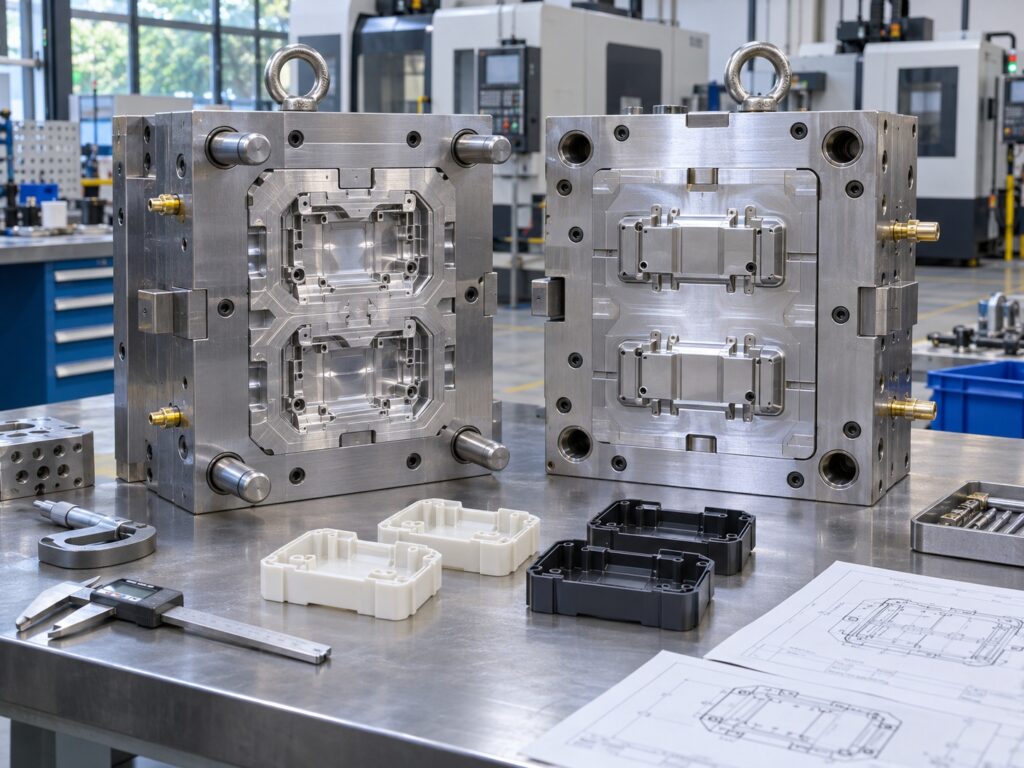
Injection Mold Transfer Checklist for Overseas Buyers
Injection mold transfer involves more than collecting a steel tool and arranging transportation.
Even when ownership is clear, a successful transfer depends on tool condition, technical documentation, equipment compatibility, and approval at the receiving factory.
A mold that performs reliably on one injection molding machine may need adjustments, different auxiliary equipment, or renewed process development elsewhere.
Before Transfer: Confirm Ownership and Mold Condition
Begin by reviewing the tooling agreement and confirming the release process with the current supplier.
Identify the exact mold and associated components being transferred.
Where available, review recent production records, maintenance history, unresolved repair issues, and the status of spare parts.
If the mold has not operated for an extended period, a condition inspection may be appropriate before shipment.
Technical Documents and Equipment Compatibility
The receiving manufacturer needs enough information to assess whether the existing mold can run on its equipment.
Depending on the tool, this may include:
- Mold assembly drawings and available 2D/3D files
- Mold dimensions and weight
- Cavity and core arrangement
- Mold steel and major component specifications
- Cooling connections and water-circuit information
- Hot runner requirements and electrical interfaces
- Hydraulic or pneumatic connection requirements
- Spare components and maintenance records
- Previous trial reports and approved part samples
- Available processing conditions and inspection criteria
Not every project requires the same documentation package, and access to particular files may depend on the agreed rights.
For complex tooling, an engineering review can identify compatibility issues before a mold arrives at the new factory.
Shipping, Receiving Inspection and Trial Approval
Mold transfer does not end when the shipment is delivered.
The receiving manufacturer should check the tool for transport damage, missing components, connection problems, and other conditions that could affect production.
A trial run may then be necessary to confirm mold operation and molded-part quality on the new equipment.
Where applicable, dimensional inspection, appearance checks, functional testing, and customer sample approval should be completed before full production resumes.
For more information on sample evaluation, see PALUM’s guide to the injection mold trial process.
Practical Mold Transfer Handover Checklist
| Transfer Stage | Required Checks | Acceptance Considerations |
|---|---|---|
| Before release | Ownership terms, tool identification, release authorization | Correct tool and agreed release conditions |
| Condition review | Tool photographs, service history, known defects | Condition recorded before transport |
| Documentation | Available drawings, specifications, component records | Receiving factory has the agreed information |
| Equipment review | Mold size, clamping, ejector, cooling, hot runner requirements | Compatibility reviewed before shipment |
| Packaging and shipping | Corrosion protection, secure packing, transport arrangements | Suitable protection and responsibilities agreed |
| Receiving inspection | Physical condition, included components, connection points | Damage or discrepancies documented |
| Trial production | Mold operation, process settings, sample quality | Results reviewed against agreed requirements |
| Production release | Dimensional, visual, and functional approval as applicable | Authorization to begin regular production |
A documented handover helps both the original and receiving suppliers understand when responsibility changes.
How to Avoid Tooling Ownership Disputes
Most tooling ownership problems are easier to prevent during procurement than to resolve after production has stopped.
The following situations deserve particular attention.
A Tooling Fee Without Clear Ownership Terms
A quotation may include a tooling charge without stating who owns the finished mold.
Ask for clarification before issuing the purchase order.
Ownership Without an Agreed Release Procedure
A buyer may own the mold but still face disagreement about notice periods, outstanding charges, preparation costs, or collection arrangements.
Define the release process while the commercial relationship is running normally.
Physical Tooling Without Necessary Documentation
A factory may receive the mold but lack the information needed to operate or service it.
Identify critical technical deliverables early, including any restrictions on data access.
Unclear Maintenance Responsibilities
Disputes can arise when a mold requires substantial repair and neither party has a clear understanding of who must approve or pay for the work.
Agree on routine maintenance and exceptional repair procedures separately.
Moving a Mold Without a Feasibility Review
Transferring an existing tool can appear less expensive than manufacturing a replacement. However, transport, adaptation, repair, and validation costs may change that calculation.
Before committing to a move, ask the receiving manufacturer to assess the mold’s condition and compatibility.
When preparing a new tooling project, PALUM’s injection mold RFQ checklist explains the technical and commercial information manufacturers need for a meaningful quotation.
Including tooling ownership and transfer expectations in the RFQ can prevent those requirements from being overlooked during supplier selection.
Frequently Asked Questions About Injection Mold Ownership
Does paying for an injection mold automatically make the buyer its owner?
Not necessarily. Injection mold ownership depends on the contract and applicable law; buyers should confirm the ownership transfer conditions before making payment.
Can a buyer move a mold to another manufacturer?
A transfer may be possible when the buyer has the necessary rights and agreed release conditions are satisfied. The receiving factory must also assess technical compatibility and any required modifications.
Who is responsible if a customer-owned mold is damaged during storage?
Responsibility depends on the relevant contractual terms and circumstances. Buyers should define storage duties, damage reporting, insurance, and repair authorization before leaving tooling with a supplier.
Are CAD files and mold drawings included when a mold is transferred?
Not automatically. The tooling agreement should specify which technical files will be supplied, their formats, and any access or intellectual property restrictions.
What should buyers check before restarting production with a transferred mold?
Confirm the mold’s physical condition, machine compatibility, and required trial results. Approve sample dimensions, appearance, and functional performance against the applicable product requirements before routine production.

Discuss Your Tooling Requirements with PALUM
Clear tooling requirements help prevent avoidable disagreements and reduce uncertainty when a product moves from development to production.
At PALUM, our mold manufacturing services cover engineering review, mold design, machining, assembly, and trials for custom injection molding projects.
If you are planning new tooling or reviewing a potential supplier change, share your part drawings, expected production volume, tooling specifications, delivery requirements, and any ownership or storage terms you need to discuss.
Our team can review the technical scope and clarify available manufacturing and project arrangements before quotation.
Contact PALUM to Discuss Your Tooling Project
Note: This article provides general procurement and tooling-management information. Ownership, intellectual property, and transfer rights depend on the relevant agreements and applicable law. Seek qualified legal advice where contractual or cross-border disputes require it.