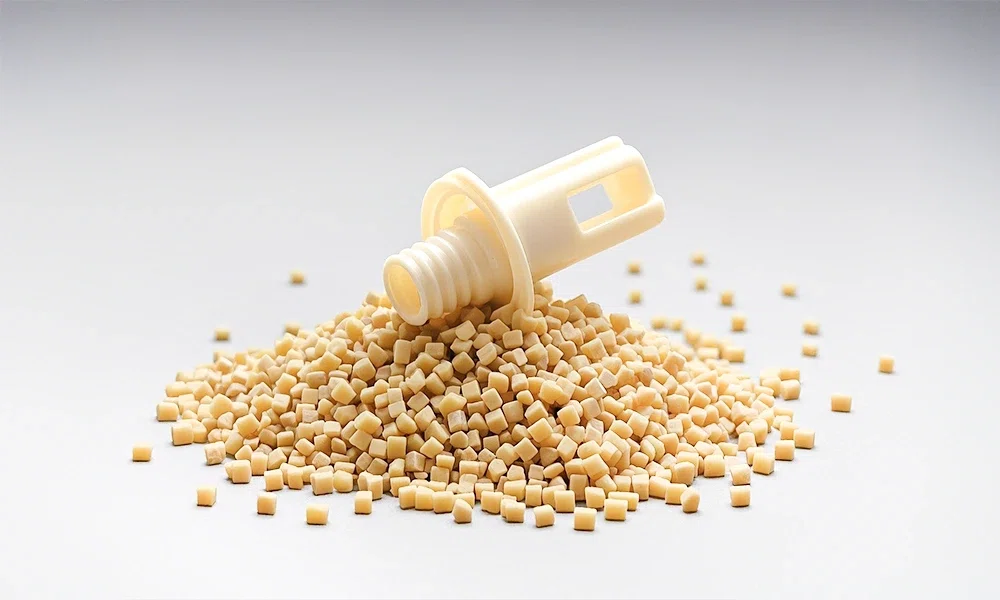
Material selection is one of the earliest decisions in an injection molding project, but it should not be made in isolation.
The resin affects more than the final part’s appearance or mechanical properties. It can also influence mold design, shrinkage, dimensional stability, filling behavior, cooling, warpage, surface quality and production consistency.
For this reason, choosing a plastic material should begin with the requirements of the finished component.
At PALUM, we normally evaluate material requirements together with part geometry, assembly conditions, appearance needs and the intended production process. The goal is not simply to select a commonly used resin, but to choose a material that can work with the design and manufacturing requirements of the project.
Why Material Selection Matters in Injection Molding
Two plastic parts with similar shapes can require very different materials.
A visible electronic housing may prioritize surface appearance and dimensional consistency. A structural appliance component may place more emphasis on part geometry and mechanical performance. A transparent component may require clarity and careful surface control.
Material selection can influence:
- Part strength
- Dimensional stability
- Surface appearance
- Transparency
- Flexibility
- Wear behavior
- Shrinkage
- Warpage
- Mold filling
- Cooling behavior
- Assembly fit
- Production repeatability
This means the material decision should be connected to both part design and mold engineering.
A resin that performs well in one application may not be suitable for another, even if both parts are produced by injection molding.
Start with the Final Part Requirement
Before comparing resin types, it is useful to define what the molded component actually needs to do.
Important questions may include:
- Is the part structural or mainly cosmetic?
- Does it need to fit with other components?
- Are there visible surfaces?
- Does the design include ribs, bosses or snap features?
- Is transparency required?
- Are there customer-specified material grades?
- What production quantity is expected?
- Are dimensional requirements important?
- Are there specific application conditions?
These answers help narrow the material options.
In many projects, the best material is not the one with the highest technical specification. It is the one that provides the required performance while remaining suitable for the part design and molding process.
ABS for Injection Molded Housings and General Parts
ABS is widely used for plastic housings, covers and general molded components.
It is often considered when a project requires a balance of:
- Moldability
- Surface appearance
- Structural performance
- Dimensional consistency
- General assembly requirements
ABS can be suitable for many consumer products, electronics housings, appliance components and other appearance-focused parts.
However, the final decision should still consider the exact material grade and the requirements of the application.
Design Considerations for ABS Parts
When designing ABS injection molded components, engineers may need to review:
- Wall thickness consistency
- Rib and boss design
- Draft angles
- Visible surfaces
- Assembly features
- Shrinkage
- Warpage risk
Large flat surfaces or uneven wall sections can influence deformation and appearance, so geometry should be reviewed together with the molding process.
PC/ABS for Parts Requiring Balanced Performance
PC/ABS combines characteristics associated with polycarbonate and ABS and is commonly considered for housings and functional plastic components.
Typical applications may include:
- Electronic housings
- Equipment covers
- Appliance components
- Functional enclosures
- Appearance-focused molded parts
PC/ABS is often selected where the project requires a combination of appearance, molded structure and functional performance.
However, specific properties depend on the selected grade.
What to Review Before Selecting PC/ABS
Project teams should consider:
- Part geometry
- Wall thickness
- Surface requirements
- Dimensional needs
- Assembly conditions
- Processing behavior
- Customer material specifications
The mold and processing conditions should be planned around the actual resin grade rather than assuming all PC/ABS materials behave the same way.
PP for General and Structural Plastic Components
Polypropylene, or PP, is used in many injection molding applications.
It may be considered for:
- General-purpose plastic parts
- Structural components
- Covers
- Containers
- Functional molded parts
- Certain appliance or automotive applications
PP can behave differently from materials such as ABS or PC/ABS, particularly in relation to shrinkage and part geometry.
Design Considerations for PP
Part design should pay attention to:
- Wall thickness
- Rib structure
- Large flat areas
- Shrinkage
- Warpage
- Assembly features
- Ejection
For larger molded components, geometry and cooling can have a significant influence on dimensional stability.
This is one reason moldflow or warpage analysis can be useful for selected projects before final tooling decisions are made.
PA for Functional and Engineering Components
Polyamide materials, commonly referred to as PA or nylon, are often considered for engineering and functional plastic components.
Possible applications include:
- Structural parts
- Functional housings
- Mechanical components
- Brackets
- Internal plastic components
- Molded parts with detailed features
PA materials are available in different grades, including filled and reinforced versions.
Because of this, it is important to identify the exact material specification before mold manufacturing begins.
Important PA Design Factors
Depending on the project, engineers may need to consider:
- Material grade
- Reinforcement
- Shrinkage
- Moisture-related behavior
- Part geometry
- Mold filling
- Dimensional requirements
- Assembly relationships
Filled or reinforced PA grades can behave differently from unfilled grades during molding, so mold design and processing should reflect the selected material.
PBT for Electrical and Functional Components
PBT is another engineering plastic used in injection molding.
It may be considered for certain:
- Electrical components
- Functional plastic parts
- Housings
- Structural parts
- Precision molded features
For electrical and electronics projects, material selection may depend on customer specifications and the functional requirements of the final component.
The exact resin grade should be confirmed before tooling parameters and shrinkage assumptions are finalized.
POM for Precision Functional Parts
POM is often associated with functional plastic components that require stable molded features and good dimensional behavior.
Typical applications can include:
- Small mechanical parts
- Functional components
- Moving interfaces
- Precision molded features
- Assembly parts
For these applications, molded geometry can be just as important as material selection.
Small features, mating surfaces and critical dimensions should be reviewed during DFM and tooling development.
PC and PMMA for Transparent Components
Transparent plastic parts require a different design approach from general structural components.
PC and PMMA are two materials that may be considered for clear or appearance-focused injection molded parts.
Applications may include:
- Transparent covers
- Display-related parts
- Light-transmitting components
- Clear housings
- Appearance components
Transparency Depends on More Than the Resin
A transparent material does not automatically produce a high-quality transparent part.
The final result can also be affected by:
- Mold surface condition
- Gate design
- Flow behavior
- Part thickness
- Processing conditions
- Surface defects
- Contamination
- Ejection design
This means optical or appearance-focused parts require coordination between material choice, mold manufacturing and molding conditions.
Part Geometry Can Change the Material Decision
Material selection and part design should not be treated as separate steps.
A resin that looks suitable from a data sheet may behave differently once applied to a complex molded geometry.
For example, the design may include:
- Deep ribs
- Thick bosses
- Thin walls
- Long flow paths
- Snap fits
- Large flat panels
- Transparent surfaces
- Multiple assembly interfaces
These features can influence filling, cooling, shrinkage and deformation.
A DFM review can help determine whether the design is appropriate for the intended material before the mold is manufactured.
Wall Thickness Should Match the Material and Part
Wall thickness is one of the most important elements in injection molded part design.
Large changes in wall thickness can create uneven cooling and shrinkage.
Potential issues may include:
- Sink marks
- Warpage
- Internal stress
- Inconsistent appearance
- Longer cooling time
- Filling problems
Where possible, wall sections should be designed with reasonable consistency.
If thicker structural areas are needed, ribs or other design features may sometimes provide a better solution than simply increasing wall thickness.
The correct approach depends on the material and the part.
Ribs and Bosses Need Material-Specific Review
Ribs and bosses are common in injection molded parts because they can support structure and assembly without making the entire wall thicker.
However, poorly designed features can create:
- Sink marks
- Warpage
- Difficult filling
- Weak areas
- Ejection problems
- Appearance defects
The size and position of ribs and bosses should therefore be reviewed together with:
- Base wall thickness
- Material shrinkage
- Surface requirements
- Assembly loads
- Mold construction
This is particularly important for visible housings and precision assembly components.
Draft Angle Affects Mold Release and Surface Quality
Draft helps the molded part release from the tool.
Insufficient draft may increase ejection difficulty and can affect surface quality.
The amount of draft required depends on factors such as:
- Part depth
- Surface texture
- Material
- Molded geometry
- Ejection method
Textured surfaces may require different draft considerations from smooth surfaces.
Draft should therefore be reviewed early in the part design stage rather than added after the tooling design is already complete.
Shrinkage Must Be Considered Before Tooling
Every injection molding material has shrinkage characteristics, but the actual molded result also depends on:
- Material grade
- Part geometry
- Wall thickness
- Gate location
- Mold temperature
- Processing conditions
- Cooling
This means shrinkage should not be treated as a single fixed number without considering the real project.
Tooling dimensions are developed around the expected molded behavior of the selected material.
For parts with important dimensions or assembly relationships, mold trials are necessary to compare actual molded parts with the design requirements.
Material Selection and Warpage Are Closely Connected
Warpage occurs when different areas of a part shrink or cool unevenly.
The selected resin can influence this behavior, especially when combined with complex geometry or uneven wall thickness.
Potential causes may include:
- Material shrinkage
- Fiber orientation
- Uneven cooling
- Gate location
- Part geometry
- Wall thickness variation
- Processing conditions
For complex parts, warpage analysis can help identify potential risks before the mold is finalized.
However, simulation should still be confirmed through real mold trials and part inspection.
Do Not Choose a Material by Name Alone
One of the most important rules in injection molding material selection is:
The resin family is only the starting point.
For example, two grades of the same polymer may have different:
- Reinforcement levels
- Flow behavior
- Shrinkage
- Appearance
- Processing requirements
- Functional properties
This is why the exact material grade should be confirmed whenever the project has specific performance requirements.
If the grade has not yet been selected, the manufacturer can review the available project information and discuss suitable options with the customer.
How PALUM Reviews Material Requirements
For a new plastic component project, the material discussion should be connected to the complete manufacturing process.
A practical review normally includes:
Part Geometry
The shape, wall thickness, ribs, bosses and functional features affect moldability.
Application Requirements
The final use of the component helps determine what material performance is needed.
Appearance Requirements
Visible, textured or transparent parts may require additional material and tooling considerations.
Assembly Conditions
Mating features, snap fits, mounting points and dimensional relationships should be reviewed.
Production Requirements
Expected quantity, mold structure and molding conditions may influence the final manufacturing approach.
At PALUM, material requirements can be reviewed together with DFM, mold engineering, tooling and injection molding so the material decision is connected to the actual molded part.
A Better Way to Select Injection Molding Materials
The best material selection process does not begin by asking:
“Which plastic is best?”
A better question is:
“Which material best matches this part, application and manufacturing process?”
A useful selection sequence is:
- Define the part function.
- Review geometry and assembly requirements.
- Identify appearance requirements.
- Confirm customer or application material specifications.
- Compare suitable resin families and grades.
- Review moldability and shrinkage.
- Finalize tooling assumptions.
- Validate the material during mold trials.
This approach reduces the risk of selecting a resin that looks suitable technically but creates avoidable tooling or production problems.
From Material Selection to Stable Production
Injection molding material selection affects the entire project.
ABS, PC/ABS, PP, PA, PBT, POM, PC and PMMA can all be useful materials, but each one should be evaluated according to the specific component rather than selected from a generic list.
The best results come from coordinating:
Material → Part Design → Mold Engineering → Mold Trial → Injection Molding → Verification
If you already have a part drawing, 3D model or material specification, PALUM can review the available project information and evaluate the tooling and injection molding requirements around the selected component.
Frequently Asked Questions
What is the best material for injection molding?
There is no single best material. The right choice depends on part function, geometry, appearance, assembly requirements, production conditions and customer specifications.
What materials are commonly used in injection molding?
Common materials include ABS, PP, PC/ABS, PA, PBT, POM, PC and PMMA, depending on the application and material grade.
Does material selection affect mold design?
Yes. Material shrinkage, flow behavior, processing requirements and part geometry can influence cavity dimensions, gate design, cooling and other tooling decisions.
When should the material be confirmed?
Ideally, the material or at least the intended resin family should be discussed before final mold design because it can affect tooling assumptions and processing requirements.
Can the material be changed after the mold is manufactured?
Sometimes, but changing material may affect shrinkage, dimensions, processing and part performance. Any change should be reviewed before production.
On This Page
<strong>PALUM Insights</strong>
Practical engineering information for injection molding and tooling projects.